Cushion Cut vs Princess Cut Diamonds: Which Should You Choose?
Two Shapes, Very Different Personalities
Cushion cuts and princess cuts are two of the most popular fancy diamond shapes, and they're often considered together because they occupy similar territory: both are romantic alternatives to the round brilliant, both suit a wide range of settings, and both have devoted followings. But they're quite different in character, and the choice between them affects how the ring looks, how it wears, and what you pay.
This is an honest comparison of both shapes — what they do well, where they fall short, and how to decide which is right for your ring.
The Cushion Cut
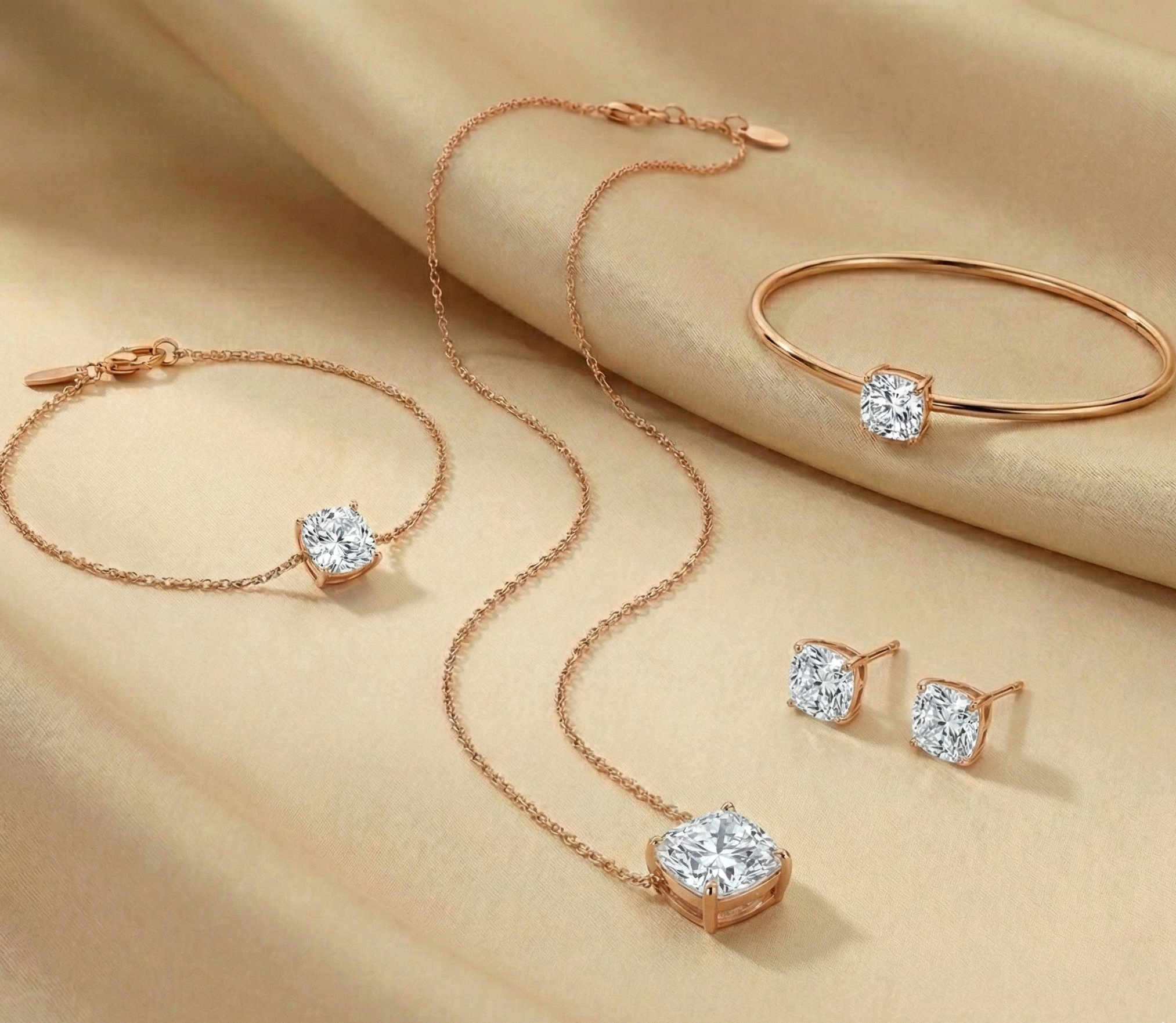
The cushion cut has been around in various forms for over 200 years. Its defining feature is the combination of a square or rectangular outline with rounded corners and larger, chunky facets. This gives cushion cuts a distinctly soft, romantic appearance — less crisp than modern shapes, more reminiscent of antique jewellery.
Cushion cuts fall into two main types: the standard cushion (sometimes called cushion modified brilliant), which shows a characteristic "crushed ice" pattern of small, scattered flashes, and the cushion brilliant (sometimes marketed as "hearts and arrows" cushion), which has a more organised, chunky facet pattern that produces bigger, more distinct flashes of light. Neither is inherently better — it's a matter of preference for either the scintillating, complex look of crushed ice or the bold, dramatic flashes of the chunky facet pattern.
What cushion cuts do well
Cushions tend to show colour less harshly than some other shapes, which means you can often go slightly lower on the colour scale (H or even I) and still have a warm-white stone that looks beautiful in yellow or rose gold. Their large, open facets also display fire (coloured light dispersion) particularly well — cushions can appear almost candle-lit in warm light.
The rounded corners make cushions more resistant to chipping than sharp-cornered shapes, and the soft outline is forgiving in a range of settings, from simple solitaires to elaborate vintage-inspired designs.
Where cushions are more complicated
Cushion cuts face up smaller than round brilliants of the same carat weight — sometimes significantly so, because cushions retain more weight in the depth. A 1.00ct cushion might face up like a 0.85–0.90ct round. This is worth factoring into your expectations when comparing stones of the same stated weight.
Cushion cut quality isn't captured well by GIA certificates. The report won't tell you whether the cushion is crushed ice or chunky, and there's no cut grade for cushions on GIA reports (unlike rounds, which receive Excellent/Very Good/Good grades). You need to view the stone to assess which pattern it has and whether you like it.
The Princess Cut
The princess cut was developed in the 1960s and refined through the 1970s and 80s. It's a square or slightly rectangular shape with pointed corners and a modified brilliant facet pattern. The result is a stone with high brilliance — closer to a round brilliant than most other fancy shapes — and a crisp, modern, geometric look.
Princess cuts were the dominant fancy shape through the 1990s and 2000s, and while they've been somewhat eclipsed by ovals and cushions in recent years, they remain a strong choice for anyone who wants maximum sparkle in a square shape.
What princess cuts do well
Princess cuts are efficient — they retain a lot of the rough diamond during cutting, which makes them relatively good value per carat compared to round brilliants (which lose more of the rough). They deliver strong brilliance and have a clean, precise look that suits contemporary settings particularly well: simple bezel settings, sleek east-west designs, and modern minimalist bands.
Where princess cuts are more complicated
The pointed corners are the main vulnerability. They're the most likely point of impact in everyday wear, and a chip at a corner — while repairable — is a real concern if the ring will see heavy use without corner protection. Princess cuts work best in settings with V-tip claws or corner protectors specifically designed to guard those points.
Princess cuts can also show colour more readily than cushions. In white metal settings, many diamond cutters recommend staying at G or better — H and below can show a faint yellow tint at the corners under certain lighting, where the corners concentrate colour.
Side by Side: The Key Differences
Look: Cushions are soft, romantic, antique-influenced. Princess cuts are sharp, modern, geometric. This is usually the deciding factor — they appeal to fundamentally different aesthetics.
Brilliance: Princess cuts have higher brilliance (white light return) closer to a round brilliant. Cushions have more fire and dispersion but often less overall brightness, depending on the facet pattern.
Face-up size: Princess cuts generally face up larger than cushions of the same carat weight, because they retain less depth. If maximising perceived size matters, princess cuts have an edge here.
Durability: Cushions are more durable in wear due to rounded corners. Princess cuts need corner protection in the setting.
Value: Both shapes can offer better value than round brilliants per carat weight. Princess cuts are slightly more efficient from the rough, which can sometimes translate to a price advantage, though market demand also factors in.
Colour sensitivity: Cushions are more forgiving on colour, particularly in warm metal settings. Princess cuts show colour more readily, especially at the corners.
Settings That Work Best
Cushion cuts are versatile and work well in almost any setting — solitaires, haloes, pavé bands, three-stone, vintage milgrain designs. Their soft shape is particularly suited to intricate, detailed settings where the rounded outline complements the surrounding metalwork.
Princess cuts are best suited to clean, modern settings that protect the corners: four-claw settings with V-tips at each corner, bezel settings, or channel-set designs. They look particularly strong in simple, contemporary settings where the geometric shape is the focal point.
How to Choose
The aesthetic question is usually the one that settles it. If you're drawn to soft, romantic, antique-influenced jewellery, the cushion is almost certainly your shape. If you prefer clean, modern, architectural design, the princess will likely appeal more.
If you're genuinely undecided, we'd suggest looking at both shapes in person before committing — the difference in character is immediately apparent when you see them side by side. Both are beautiful; they just appeal to different sensibilities.
Book a consultation to view both shapes and work through what suits you and your design brief.