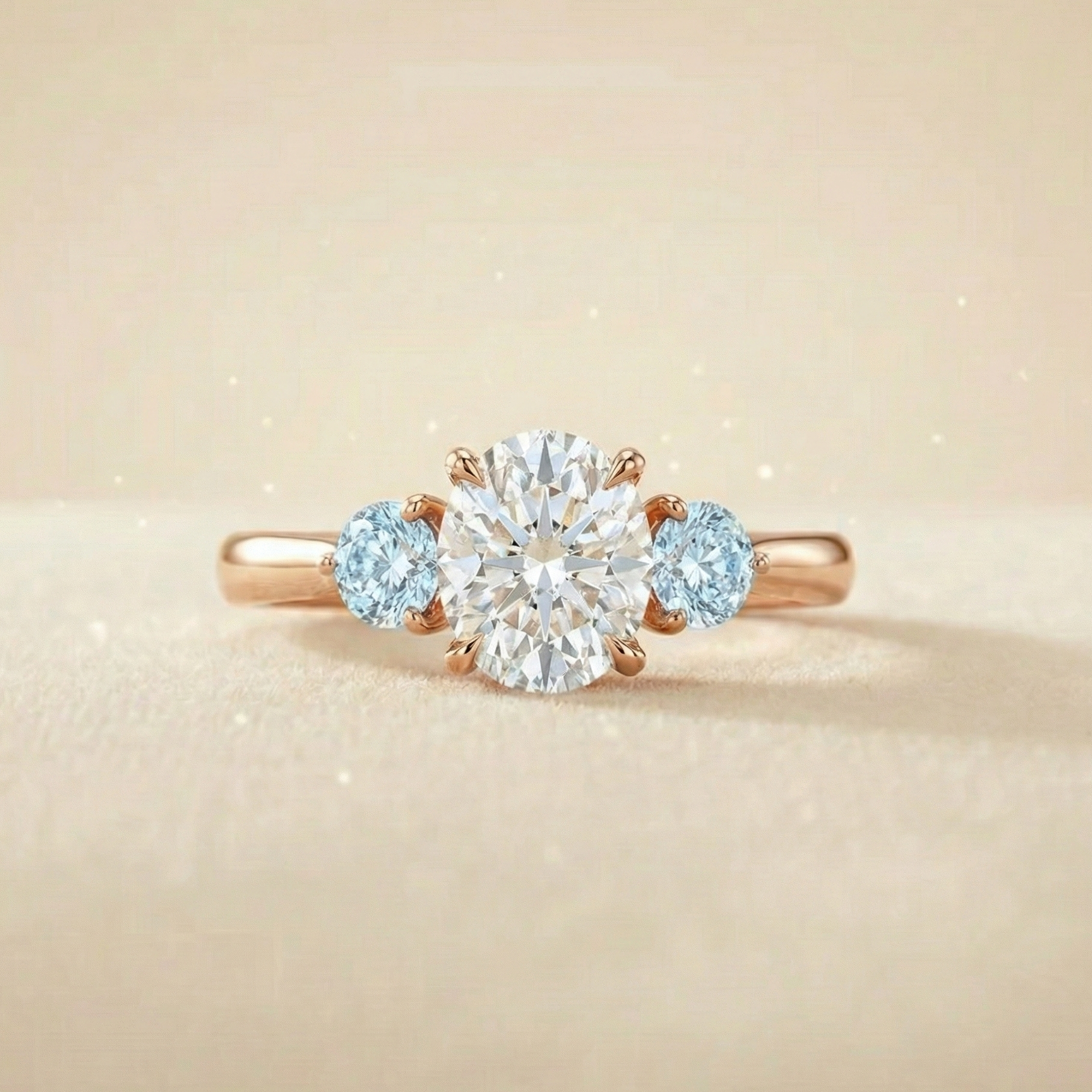
Choosing Your Wedding Band: The Practical Guide
The Band Decision Gets Less Attention Than It Deserves
Most couples spend considerably more time choosing the engagement ring than the wedding band — which makes sense, given that the engagement ring is the centrepiece and the band comes later. But the band sits directly against the engagement ring every day, and a poor choice creates friction, visual awkwardness, or accelerated wear on both pieces. Getting it right is worth some thought.
This guide covers the main decisions: metal matching, profile and fit, style choices, and how to think about the band relative to the engagement ring you already have.
Metal: Match It
The single most important rule for wedding bands worn alongside an engagement ring: keep the metals the same. A platinum engagement ring should sit next to a platinum band. An 18K white gold ring should have an 18K white gold band.
The reason is wear. Different metals have different hardness. When a harder metal sits against a softer one and rubs repeatedly — which rings worn together do constantly — the softer metal wears away faster. Platinum is harder than gold; a platinum band will gradually abrade a white gold ring over years of wear. Beyond the physical wear, the subtle colour difference between platinum (cool white) and rhodium-plated white gold (brighter, slightly warmer white) becomes noticeable when the pieces sit side by side.
If your engagement ring is platinum, your wedding band should be platinum. If it's 18K white gold, go 18K white gold. This is one decision where aesthetic preference should follow practical reality.
Profile: Flat, Comfort Fit, or Shaped?
The band's cross-section affects how it feels on the finger and how it sits against the engagement ring.
A flat band has a flat inner surface and sits flush. These are the most traditional profile — clean, simple, and well-suited to engagement rings with straight shanks. They can feel slightly rigid compared to other profiles but look the most precise.
A comfort fit band has a slightly domed inner surface, which reduces the contact area against the finger and makes it easier to put on and take off. Most people find comfort fit bands more wearable daily, particularly in heavier metals like platinum. The outer profile can still be flat or domed.
A shaped or contoured band is designed to curve around the engagement ring's setting. If your engagement ring has a pronounced shape — a halo that sits high, a curved prong design, or a setting that flares out — a straight band may leave an awkward gap at the sides. A contoured band is cut to follow the engagement ring's outline, sitting flush with no gap. These require more precise fitting and are usually made to order.
Width
Wedding band width is typically measured in millimetres. For women's rings, 2–3mm is delicate and minimal; 4mm is a medium width; 5–6mm is a substantial statement band.
The engagement ring's shank width matters here. A band that's significantly wider than the engagement ring's shank will look mismatched — the band dominates the ring it's meant to complement. As a general rule, the band should be similar in width to the engagement ring's shank, or slightly narrower.
Also consider the setting's height. A high cathedral or prong setting may require a narrower band to sit flush, or a contoured band. A bezel or flush setting with a lower profile is more accommodating of wider bands.
Plain, Pavé, or Eternity?
The style decision often comes down to how much the band should add visually versus recede into the background.
A plain polished band — sometimes called a classic or court band — draws no attention to itself. It simply frames the engagement ring. This is often the right choice when the engagement ring is particularly elaborate or has significant diamond presence already.
A pavé or half-pavé band has small diamonds set into the surface, adding sparkle that complements rather than competes with the engagement ring. A half-pavé (diamonds on the top half only, plain on the underside) is practical — the plain underside protects the diamonds from the most direct wear. Full pavé is more dramatic.
An eternity band has diamonds running all the way around. It adds continuous sparkle and can look beautiful, but there are practical considerations: eternity bands can't be resized after setting (the diamonds prevent the usual cutting and rejoining), so sizing needs to be exact. If finger size might change — which it does for most people over time — a half-eternity or pavé band is more practical.
For Men's Wedding Bands
Men's bands are generally simpler in design but the same principles apply on metal and profile. Width choices are typically 5–8mm. Flat and comfort fit are both common; comfort fit tends to be preferred for heavier rings. Finish choices — high polish, brushed/satin, or a combination — affect how formal the ring looks and how visible fingerprints and minor scratches are (brushed finishes hide daily wear better than high polish).
Men who work with their hands should consider a lower-profile design and think carefully about metal choice — platinum and 18K gold are both appropriate, but the ring should be comfortable and safe for the wearer's actual daily activities.
Timing and Sizing
Wedding bands should be ordered at least two to three months before the wedding to allow for production and any adjustments. Finger size fluctuates with temperature, time of day, and hydration — sizing should be done in comfortable conditions, not when it's hot or after exercise. Most jewellers will resize once after delivery if needed.
If you're ordering bespoke bands to complement an existing engagement ring, bring the engagement ring to the consultation — we'll need to see the actual piece to ensure the profile, width, and metal work together properly.
Book a consultation to start the process, or message us with any questions.