Ring Polishing in Singapore: How It’s Done, When You Need It, and When to Avoid It
Ring polishing can smooth surface scratches, but it removes a small amount of metal. For light marks, start with cleaning and inspection rather than assuming the ring needs refinishing. Normal wear is expected on both gold and platinum.
This guide explains how ring polishing is actually done, when it should be performed, and why excessive polishing shortens the lifespan of your ring. It also clarifies how lifelong resizing works alongside responsible polishing—so clients return when it truly matters, not on a monthly basis.
What Ring Polishing Really Is (And What It Is Not)
Polishing is not cleaning. Cleaning removes dirt, oils, and residue. Polishing physically removes a thin layer of metal to restore surface smoothness and shine.
Every time a ring is polished:
- A small amount of metal is permanently removed
- Edges and corners become slightly softer
- Prongs and fine details gradually lose definition
This is why professional jewellers never recommend frequent polishing as routine maintenance.
How Ring Polishing Is Done by a Professional Jeweller
Step 1: Structural Assessment
Before any polishing begins, the ring is inspected for metal thickness, prong height, wear patterns, and previous polishing history. If polishing would compromise strength or stone security, it is not performed.
Step 2: Selective Surface Refinement
Deeper scratches may need more material removed than fine surface marks. The jeweller should decide whether to reduce them, leave some visible, or discuss repair. Removing every mark is not always appropriate for a thin band or fine detail.
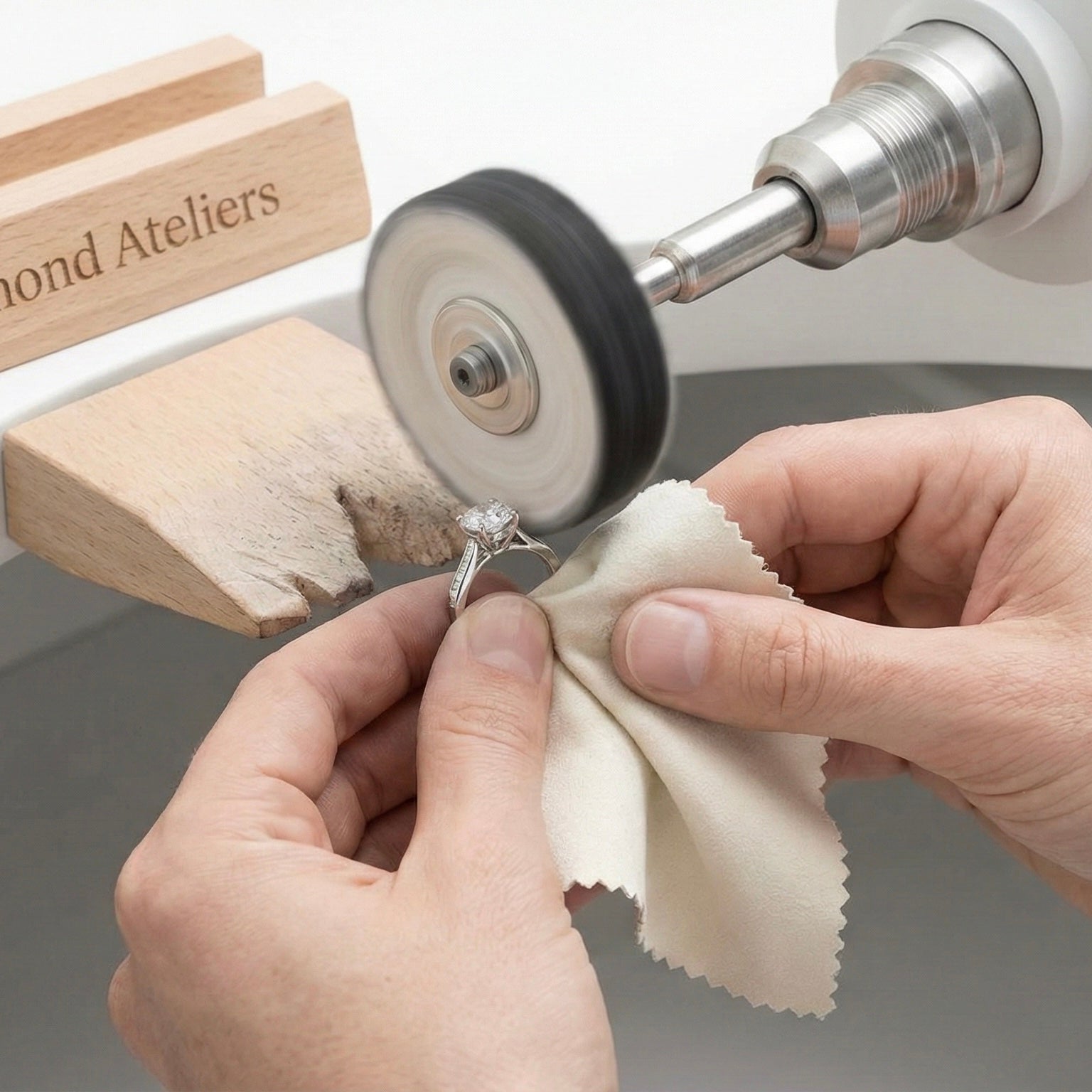
Step 3: Multi-Stage Polishing and Finishing
The ring is polished in stages using progressively finer compounds. The objective is to restore brilliance while removing the least amount of metal possible.
When Ring Polishing Should Be Done
There is no fixed polishing schedule for every ring. The decision depends on its condition, construction, finish and previous work. Inspect the piece first; a date on the calendar is not a reason to remove more metal.
Polishing is appropriate when:
- Scratches are clearly visible at normal viewing distance
- The surface remains dull even after proper cleaning
- You are refreshing the ring for a milestone or special occasion
A ring does not need polishing simply because it no longer looks “brand new.”
When Ring Polishing Should NOT Be Done
Repeated or aggressive polishing can thin metal and soften fine details. The risk depends on the amount removed and the ring’s construction.
Avoid polishing when:
- Only fine hairline scratches are present
- The ring was polished recently
- Prongs are already showing signs of wear
Over-polishing accelerates metal thinning—especially at the base of the ring and around prongs, where strength matters most.
Does Polishing Damage Gold or Platinum?
Gold (Yellow, White, Rose)
Gold alloys are relatively soft. Frequent polishing rounds edges, reduces metal thickness, and weakens prongs over time.
Platinum
Platinum develops a natural patina rather than losing metal quickly. The patina is not damage and does not require immediate polishing. Polishing platinum still removes material and should be done sparingly.
Polishing and Aftercare at Diamond Ateliers
Polishing requests are assessed individually. Our Aftersales Care policy explains the current eligibility, frequency guidance and complimentary-service limits. Cleaning, inspection, resizing and polishing are different services; do not assume that a visit or resize automatically includes a cosmetic refinish.
Contact us before visiting to arrange aftercare. Weekend walk-in, same-day aftercare is not offered under the current scheduling policy.
How to Keep Your Ring Looking Good Without Polishing
To minimise the need for polishing:
- Clean your ring regularly with mild soap and a soft brush
- Remove it during gym sessions, housework, or manual labour
- Store it separately to prevent abrasion from other jewellery
Professional Assessment Always Comes First
A well-made ring should last decades. Responsible polishing preserves that lifespan rather than shortening it. If your ring looks worn, the correct first step is inspection—not automatic polishing.
Contact Diamond Ateliers to arrange an assessment. Tell us the ring’s material, finish and concern, and mention any loose stone, catching prong or recent impact before requesting polishing.
— Founder, Diamond Ateliers