The 4Cs of Diamonds Explained: An Honest Buying Guide
Why the 4Cs Matter — and Which One Actually Drives How a Diamond Looks
If you’ve spent any time researching diamonds, you’ve encountered the 4Cs: cut, colour, clarity, and carat weight. Every jeweller explains them. Most explanations are either too technical to be useful or too simplified to help you make a real decision.
This is our honest breakdown — what each one actually means, how they affect what you see in a ring, and where you can make trade-offs without noticing the difference.
Cut: The One That Matters Most
Cut is the single most important factor in how a diamond looks, and it’s the one that receives the least attention in most buying guides. This is backwards.
Cut doesn’t refer to the shape of the diamond (round, oval, emerald, etc.) — it refers to how precisely the facets are angled, proportioned, and finished. A well-cut diamond returns light efficiently back to your eye. A poorly-cut diamond leaks light out the bottom and sides, appearing dull and lifeless regardless of its colour or clarity grade.
GIA grades round brilliant diamonds on cut: Excellent, Very Good, Good, Fair, and Poor. For round brilliants, we recommend Excellent cut only. The price premium over Very Good is modest; the visual difference is not.
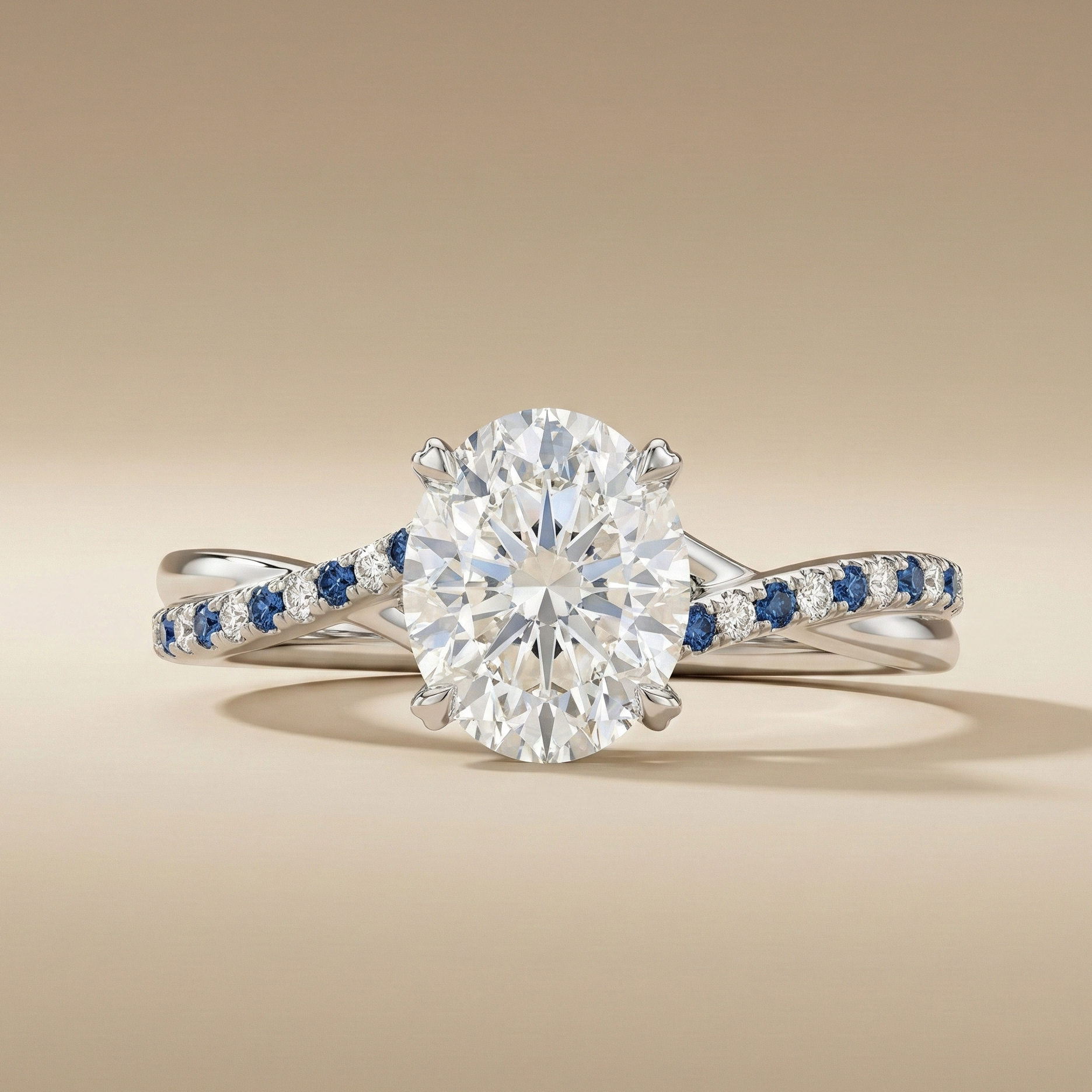
For fancy shapes (ovals, cushions, pears, emeralds, etc.), GIA does not grade cut on the same scale. This is where experience matters — a poorly-proportioned oval with a strong bow-tie shadow can look dramatically worse than a well-cut oval at the same grade. When buying fancy shapes, look at the stone, not just the certificate.
Colour: How White Is White Enough?
GIA grades diamond colour on a scale from D (colourless) to Z (light yellow or brown). D, E, and F are colourless. G, H, I, and J are near-colourless. Below J, the yellow tint becomes visible to the naked eye in most settings.
The practical truth: the difference between D and F is nearly impossible to see in a set ring unless you’re comparing them side by side in controlled lighting. The difference between G and H is similarly subtle. Most people cannot distinguish D from G once a stone is set.
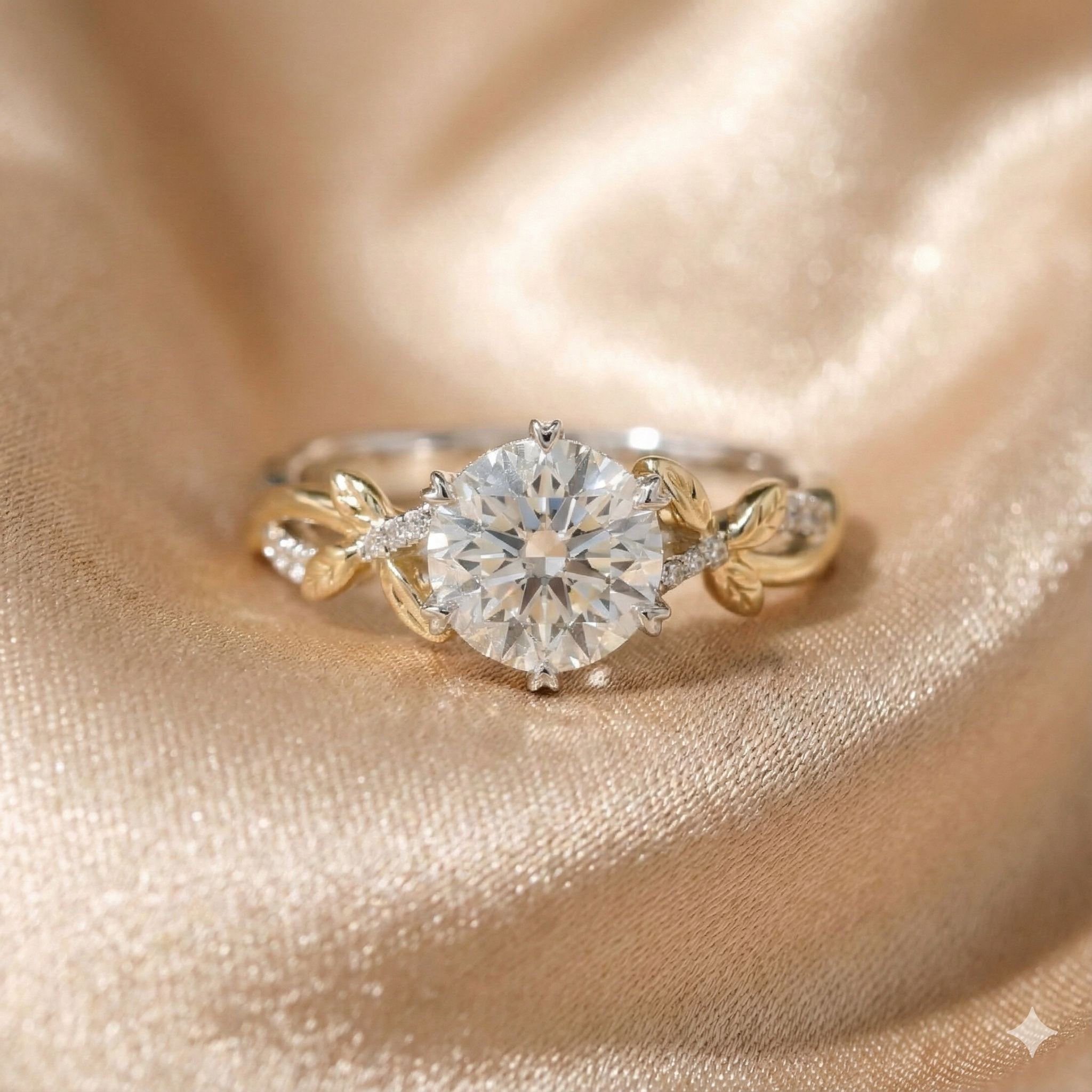
What does affect perceived colour is the metal of the setting. In a yellow gold setting, a G or H diamond will look white — the warm metal provides contrast. In a white gold or platinum setting, colour is more noticeable, and you may want to go up to F or G. For maximum face-up whiteness in a white metal setting, stay at H or above.
Where to save: H or I colour in yellow gold is excellent value. G in white gold or platinum is the sweet spot for most budgets.
Clarity: What Are You Actually Looking For?
Clarity refers to the presence of internal inclusions (tiny crystals, clouds, or growth marks inside the stone) and external blemishes. GIA grades clarity from Flawless (FL) through Internally Flawless (IF), VVS1, VVS2, VS1, VS2, SI1, SI2, and I1–I3.
The critical threshold to understand is eye-cleanliness: whether inclusions are visible to the naked eye without magnification. For most people, VS1 and VS2 stones are reliably eye-clean. Many SI1 stones are also eye-clean, depending on the nature and location of the inclusion.
You do not need Flawless or Internally Flawless clarity for a diamond to look spectacular. These grades command significant price premiums that deliver no visual benefit in a worn ring. FL is a collector’s grade, not a wearing grade.
Where to focus: VS1 or VS2 for peace of mind. For value, a well-selected SI1 with an eye-clean inclusion is entirely legitimate — but have the specific stone reviewed rather than buying solely on grade.
One nuance: clarity matters differently by shape. Emerald cuts and asscher cuts have large open tables that show inclusions more readily than round brilliants, which mask inclusions with their complex facet pattern. For step cuts, VS1 or better is advisable.
Carat: Weight, Not Size
Carat is a unit of weight (one carat = 0.2 grams), not a measurement of physical size. Two diamonds can both be 1.00ct and appear meaningfully different in size depending on how they’re cut — a shallow-cut stone spreads weight across a larger diameter but sacrifices brilliance; a well-cut stone concentrates weight and light more efficiently.
What actually determines how large a diamond looks on the finger is its diameter, not its carat weight. A 1.00ct round brilliant with an excellent cut will have a diameter of approximately 6.4–6.5mm. A poorly cut 1.00ct stone might measure 6.8mm but appear dull.
Round brilliants are the most efficient shape for visual size. Oval cuts appear larger than round brilliants of the same carat weight because their elongated shape covers more finger area. Cushion cuts often appear smaller than their weight suggests because they carry more weight in their depth.
One practical note: “magic sizes” — 0.90ct, 1.00ct, 1.50ct, 2.00ct — carry price premiums simply because they’re psychologically significant to buyers. A 0.93ct stone of excellent cut and higher colour than a 1.00ct stone at the same budget will often look superior and cost less. Don’t anchor on round numbers.
How to Balance the 4Cs in Practice
Most budgets require prioritising. Here’s the order we recommend:
Cut first — always. Never sacrifice cut to get a larger stone. A well-cut smaller diamond will outperform a poorly-cut larger one every time.
Then colour, adjusted for your setting metal. For white gold or platinum, aim for H or above. For yellow or rose gold, I or J is fine.
Then clarity — target VS2 or a vetted eye-clean SI1. Do not pay for FL or IF unless it’s personally meaningful to you.
Then carat — buy the best stone the remaining budget allows at your non-negotiable cut, colour, and clarity grades. Consider going just below a magic weight to avoid the premium.
This order is not arbitrary. Cut determines brilliance — the thing that makes a diamond look alive. Colour and clarity affect purity. Carat is just weight. The hierarchy follows visual impact.
What the Certificate Doesn’t Tell You
A GIA certificate is an objective record of a stone’s measurable properties. It doesn’t tell you whether the stone is beautiful in person. Two VS1, G colour, Excellent cut round brilliants with identical GIA grades can look meaningfully different due to factors like fluorescence intensity, table and depth percentages, and the specific nature of their inclusions.
Fluorescence — a blue glow some diamonds emit under UV light — is graded on certificates but not part of the 4Cs. In most lighting conditions it’s invisible, but in strong sunlight, medium or strong fluorescence can make a stone look slightly hazy. Strong fluorescence diamonds trade at a discount; in most cases this is unwarranted, but it’s worth viewing the specific stone.
Our recommendation: use the certificate to shortlist stones with the right grades, then evaluate the specific stones in person before buying. Numbers on paper don’t capture how a diamond catches light.
Talking Through Your Brief
The 4Cs are a framework for evaluation, not a recipe. The right combination depends on your budget, your partner’s preferences, the setting style you have in mind, and what matters most to you.
We’ve helped couples navigate this at every budget level. If you want to talk through a specific stone you’re considering, or start from scratch with a brief, we’re happy to help without pressure.
Message us on WhatsApp to start the conversation, or book a consultation to see stones in person.