Custom vs Off-the-Shelf Si Dian Jin: What’s the Difference?
When it comes to Si Dian Jin, most couples in Singapore assume there are only two options: buy a ready-made set from a jewellery chain, or follow what their parents recommend. But today, there’s a third path that’s growing quickly — bespoke Si Dian Jin Singapore couples design themselves.
So what’s the real difference between custom and off-the-shelf Si Dian Jin? Is it just about price? Design? Flexibility? Or long-term value?
As a founder-led bespoke studio producing 80–100 custom rings monthly, we’ve seen how modern couples want cultural meaning without outdated design constraints. In this guide, we’ll break down the structural, financial, and design differences clearly — so you can decide what actually fits your wedding and your future.
First, What Is Off-the-Shelf Si Dian Jin?
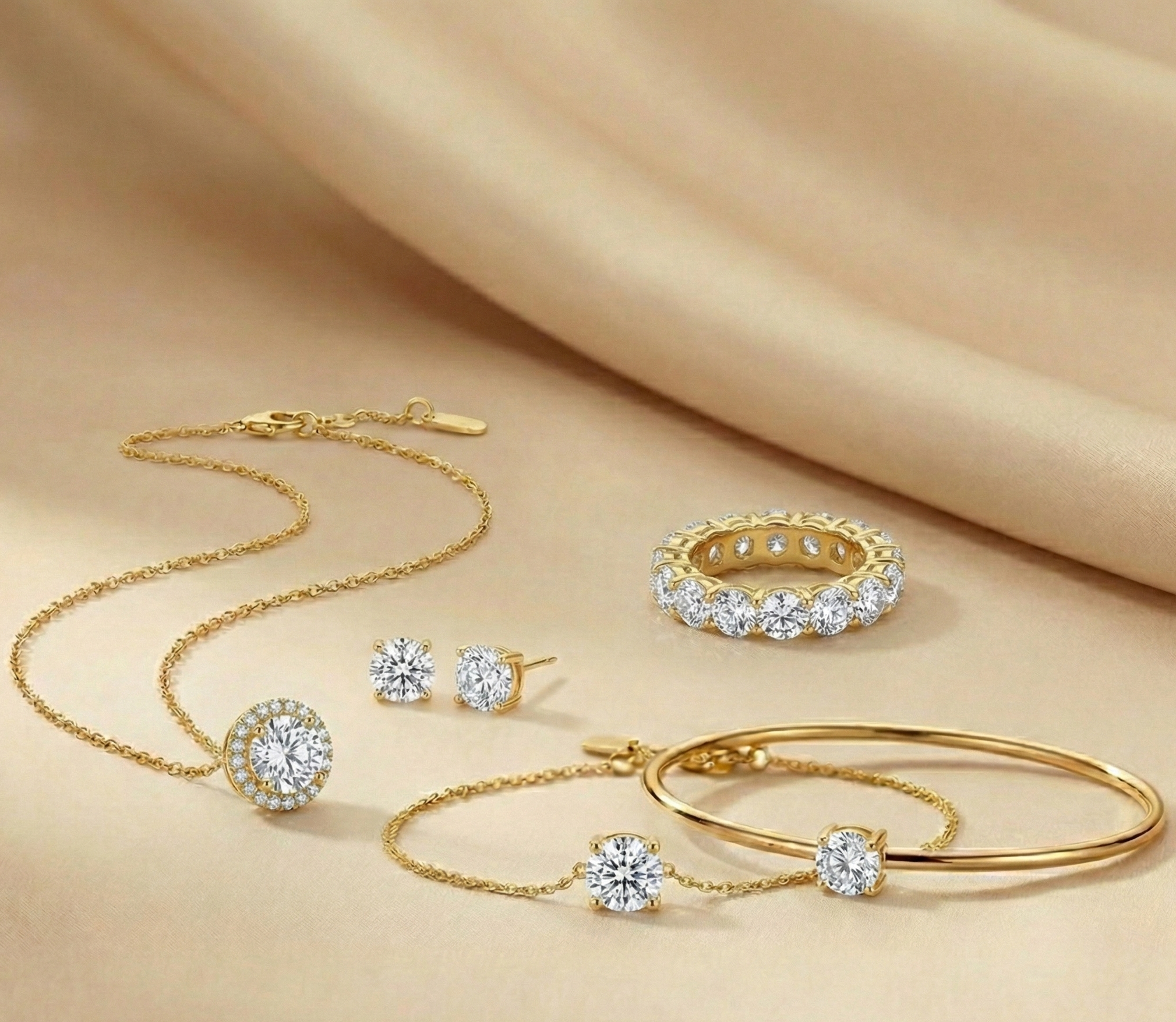
Off-the-shelf Si Dian Jin refers to pre-designed four-piece gold jewellery sets sold by traditional jewellery retailers. These are typically purchased as complete sets and include:
- Necklace
- Bracelet or bangle
- Ring
- Earrings
Designs are usually standardised, mass-produced, and purchased as-is. You may choose between several patterns, but structural changes are limited.
This model works well for families who prioritise tradition and convenience. It’s immediate, straightforward, and familiar.
What Is Custom or Bespoke Si Dian Jin Singapore Couples Are Choosing Today?
Custom Si Dian Jin is designed piece-by-piece around the bride’s taste, daily wear habits, and long-term lifestyle. Instead of selecting from existing inventory, the jewellery is conceptualised from scratch.
At Diamond Ateliers, our in-house design team uses 3D modelling and precision production to create jewellery that keeps cultural symbolism intact — while modernising structure, proportions, and wearability.
If you want a detailed breakdown of the process, we explain it step-by-step here:
How to Customise Si Dian Jin Jewellery with Diamond Ateliers
Key Differences: Custom vs Off-the-Shelf Si Dian Jin
1. Design Freedom
Off-the-shelf: You choose from existing templates. Modifications are minimal.
Custom: You control metal tone, weight distribution, diamond integration, structural thickness, proportions, and detailing.
This matters for modern Si Dian Jin design. Many brides today prefer slimmer profiles, stackable bangles, detachable pendants, or pieces that transition seamlessly beyond the wedding banquet.
Traditional heavy yellow gold may suit some, but others prefer white gold, mixed tones, or lab grown diamond accents for longevity and versatility.
2. Wearability After the Wedding
Off-the-shelf sets are often ceremonial. They may be worn once during the tea ceremony and then stored.
Custom pieces are engineered for daily use. Thickness, curvature, clasp strength, and ergonomic comfort are considered at the design stage — not after purchase.
This reframes Si Dian Jin from symbolic expense to long-term jewellery investment.
3. Price Structure in Singapore
There’s a common misconception that bespoke always costs more.
In Singapore, off-the-shelf Si Dian Jin pricing is influenced by:
- Gold weight
- Brand markup
- Retail overhead
Custom pricing depends on:
- Metal choice and weight control
- Whether diamonds are incorporated (natural or lab grown)
- Structural complexity
Because bespoke design allows material optimisation, some couples find they are paying for precision rather than unnecessary bulk.
For indicative budget framing, refer to our price guide. Exact pricing depends on design decisions — not assumptions.
4. Emotional Ownership
Off-the-shelf jewellery carries tradition.
Custom jewellery carries intention.
When you co-design a set, every curve and proportion reflects personal taste. It becomes part of your story — not just your ceremony.
Where Modern Si Dian Jin Design Is Heading
Across Singapore, wedding jewellery is evolving. Brides are choosing:
- Slimmer gold profiles
- Mixed metal tones
- Lab grown diamond integration
- Convertible pendants
- Minimalist bangles instead of ornate cuffs
This mirrors broader wedding trends discussed in:
Top Bespoke Engagement Ring Trends in Singapore 2025
The direction is clear: tradition remains — but design language modernises.
When Off-the-Shelf Still Makes Sense
To be balanced — custom is not always necessary.
Off-the-shelf may be suitable if:
- Family prefers traditional heavy gold aesthetics
- You need immediate purchase without lead time
- You do not intend to wear the pieces post-wedding
There’s nothing wrong with choosing convenience when that aligns with your goals.
When Custom Si Dian Jin Is Worth Considering
- You want jewellery you’ll wear for years
- You prefer lighter, contemporary proportions
- You want diamonds integrated intentionally
- You value structural clarity and design discussion
- You want transparency in material allocation
Our bespoke approach mirrors how we create engagement rings — fully structured, precision-led, and transparent.
Explore our bespoke design process
The Real Question Isn’t Custom vs Off-the-Shelf
Is this jewellery meant to symbolise a moment — or accompany your life?
If it’s the latter, design matters.
Speak With Us Before You Decide
If you’re weighing between traditional retail and bespoke Si Dian Jin Singapore couples are now choosing, we’re happy to walk you through the differences clearly — without pressure.
We’ll explain structural trade-offs, material allocation, and how to balance cultural expectations with modern aesthetics.
Book a consultation with Diamond Ateliers and design with clarity.
— Founder, Diamond Ateliers