IGI vs GIA vs GCAL in 2026: Does It Still Matter for Lab-Grown Diamonds?
In 2026, lab-grown diamonds are no longer a niche option in Singapore — they are the default choice for buyers who care about value, transparency, and modern craftsmanship. Yet one question still comes up in almost every consultation: IGI vs GIA vs GCAL — which certification actually matters today?
A decade ago, the answer was very different. Grading standards, market trust, and lab-grown acceptance have evolved rapidly. Some certifications still carry name recognition but add cost without adding clarity. Others have quietly become the global standard for lab-grown diamonds.
This guide explains how IGI, GIA, and GCAL compare specifically for lab-grown diamonds in 2026, what has changed, and what genuinely affects price, appearance, and long-term logic for Singapore buyers.
Why Diamond Certification Still Matters for Lab-Grown Diamonds
Certification is not about prestige. It exists for verification and comparability. A proper grading report confirms:
- That the diamond is genuinely lab-grown (CVD or HPHT)
- Objective grading of cut, colour, clarity, and carat
- Laser inscription matching the report
- Consistent pricing benchmarks across sellers
What has changed is which laboratory provides the most relevant grading for modern lab-grown stones.
IGI in 2026: The Practical Standard for Lab-Grown Diamonds
International Gemological Institute (IGI) is now the dominant certification body for lab-grown diamonds globally.
Why IGI Leads the Lab-Grown Market
- Grading systems built specifically for lab-grown diamonds
- High consistency for colour and clarity in modern production
- Faster turnaround times, essential for bespoke rings
- Universal acceptance across lab-grown trading platforms
In Singapore, the majority of lab-grown diamonds above 1.00ct are IGI certified. At Diamond Ateliers, every lab-grown diamond we work with carries an IGI report — not because it is cheaper, but because it is the most relevant, accurate, and market-aligned certification in 2026.
Is IGI Still “Softer” on Grading?
This reputation is outdated. While IGI grading was less consistent many years ago, it recalibrated its standards for lab-grown diamonds. In 2026, side-by-side comparisons show IGI grades align closely with other major labs when assessing equivalent stones.
GIA in 2026: Reputation Without a Clear Advantage
Gemological Institute of America (GIA) remains the most recognisable name in natural diamond grading. However, that reputation does not automatically translate into better outcomes for lab-grown diamonds.
Limitations of GIA for Lab-Grown Stones
- Later adoption of lab-grown grading systems
- Broader colour and clarity ranges compared to IGI
- Higher certification costs passed directly to buyers
- Slower turnaround times for custom projects
In practice, a GIA-certified lab-grown diamond in Singapore typically costs more without looking better. The premium reflects brand recognition, not visual or structural superiority.
GCAL in 2026: Technically Strong, Commercially Uncommon
Gem Certification & Assurance Lab (GCAL) is respected for advanced analytics such as light performance mapping.
Why GCAL Is Rare in Singapore
- Limited availability in Asia
- Higher fees with minimal resale recognition
- No meaningful visual advantage for well-cut modern stones
While GCAL reports are technically impressive, they do not materially improve how a lab-grown diamond looks or performs when the stone is already cut to excellent proportions.
Singapore Pricing Reality: What the Certificate Really Costs You
| Certification | Typical Price Impact | Visible Difference |
|---|---|---|
| IGI | Baseline | None |
| GIA | +8–12% | None |
| GCAL | +10–15% | Negligible |
For Singapore buyers focused on value and transparency, IGI-certified lab-grown diamonds consistently offer the strongest balance of accuracy, availability, and price efficiency.
What We Recommend at Diamond Ateliers
As a Singapore bespoke studio producing 80–100 engagement rings each month, our guidance in 2026 is straightforward:
- Choose IGI certification for lab-grown diamonds
- Prioritise cut quality over certificate branding
- Judge diamonds in person, not on paper alone
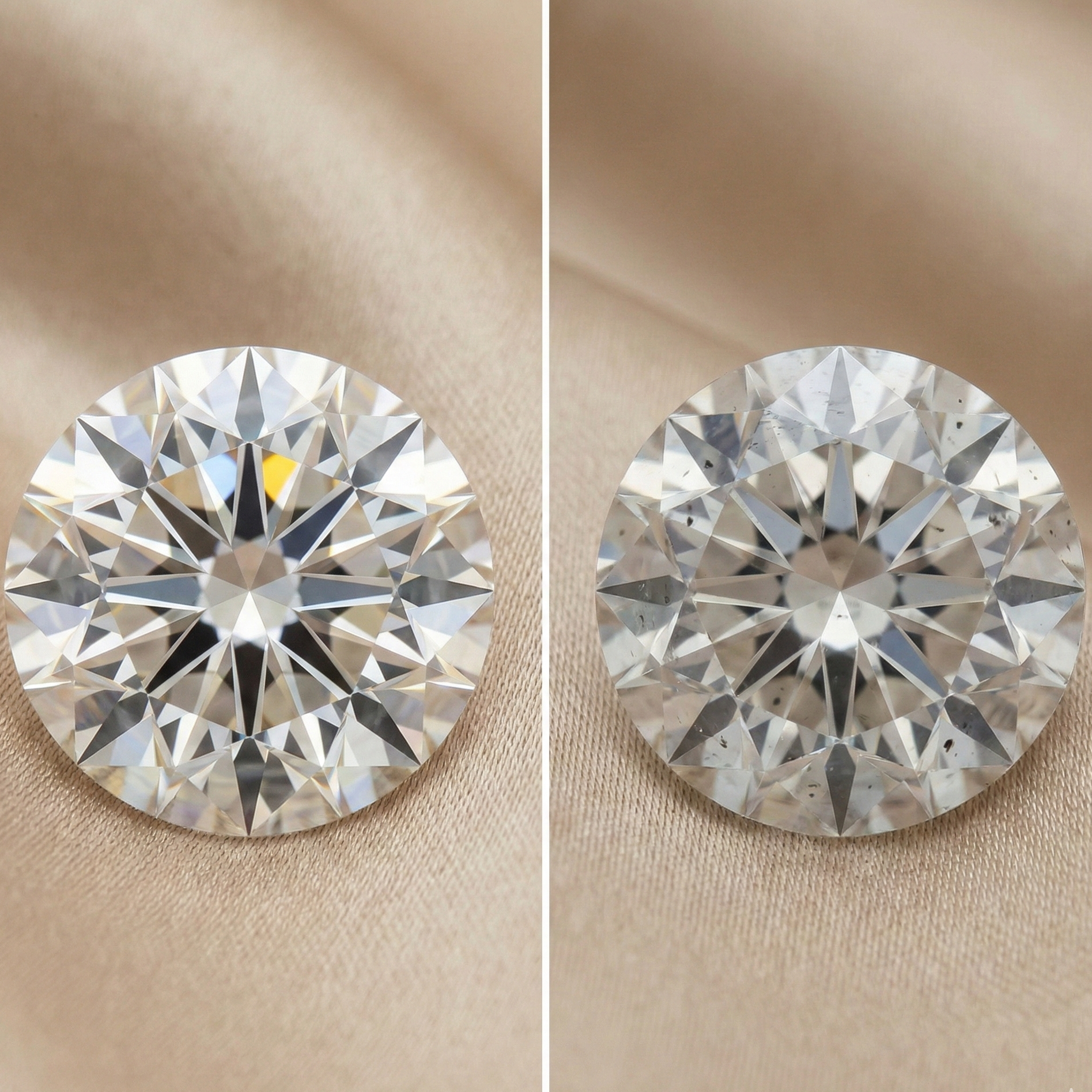
We routinely compare IGI, GIA, and GCAL stones side by side during consultations. Clients never spot a visual difference — but they always see the price difference.
Related Reading
- Lab-Grown Diamonds Explained for Singapore Buyers
- Diamond Certification & Grading: What Actually Matters
- Bespoke Engagement Rings in Singapore
Book a Private Consultation
If you want clear, founder-led guidance — not certificate-driven upselling — book a private consultation with Diamond Ateliers. We’ll walk you through real lab-grown diamonds, explain the grading differences in person, and help you choose based on facts, not marketing.
Diamond Ateliers
Singapore Lab-Grown Diamond Engagement Ring Specialists