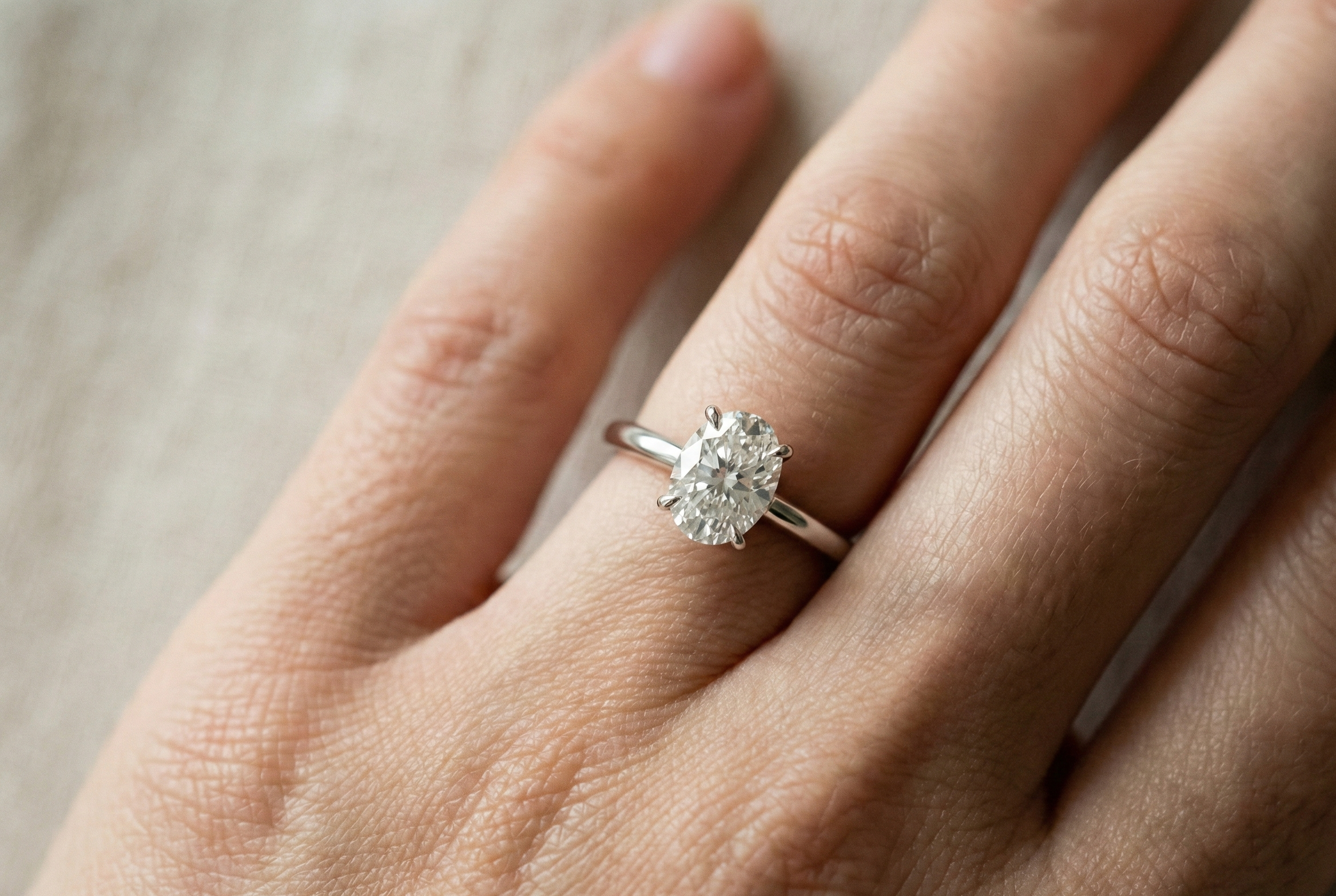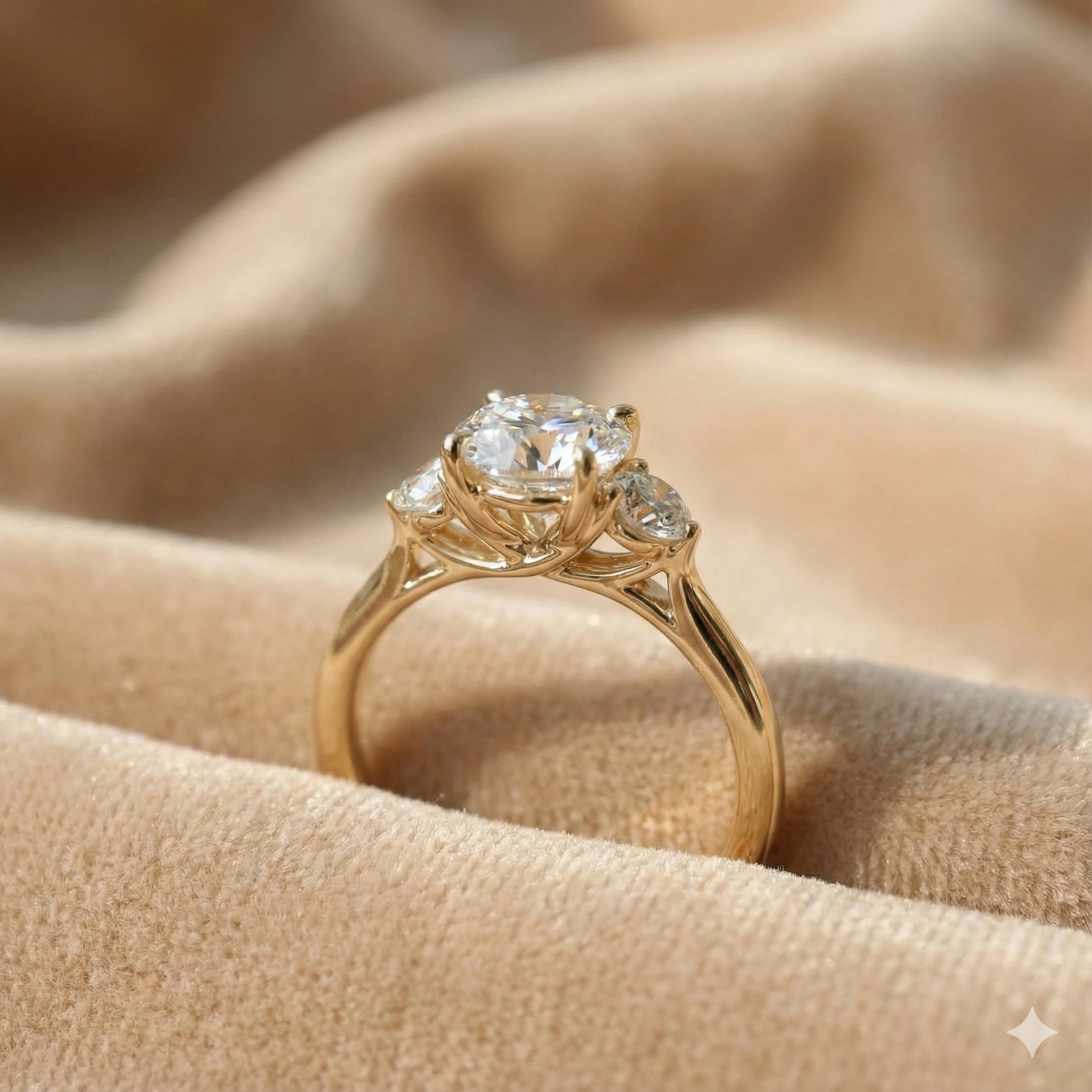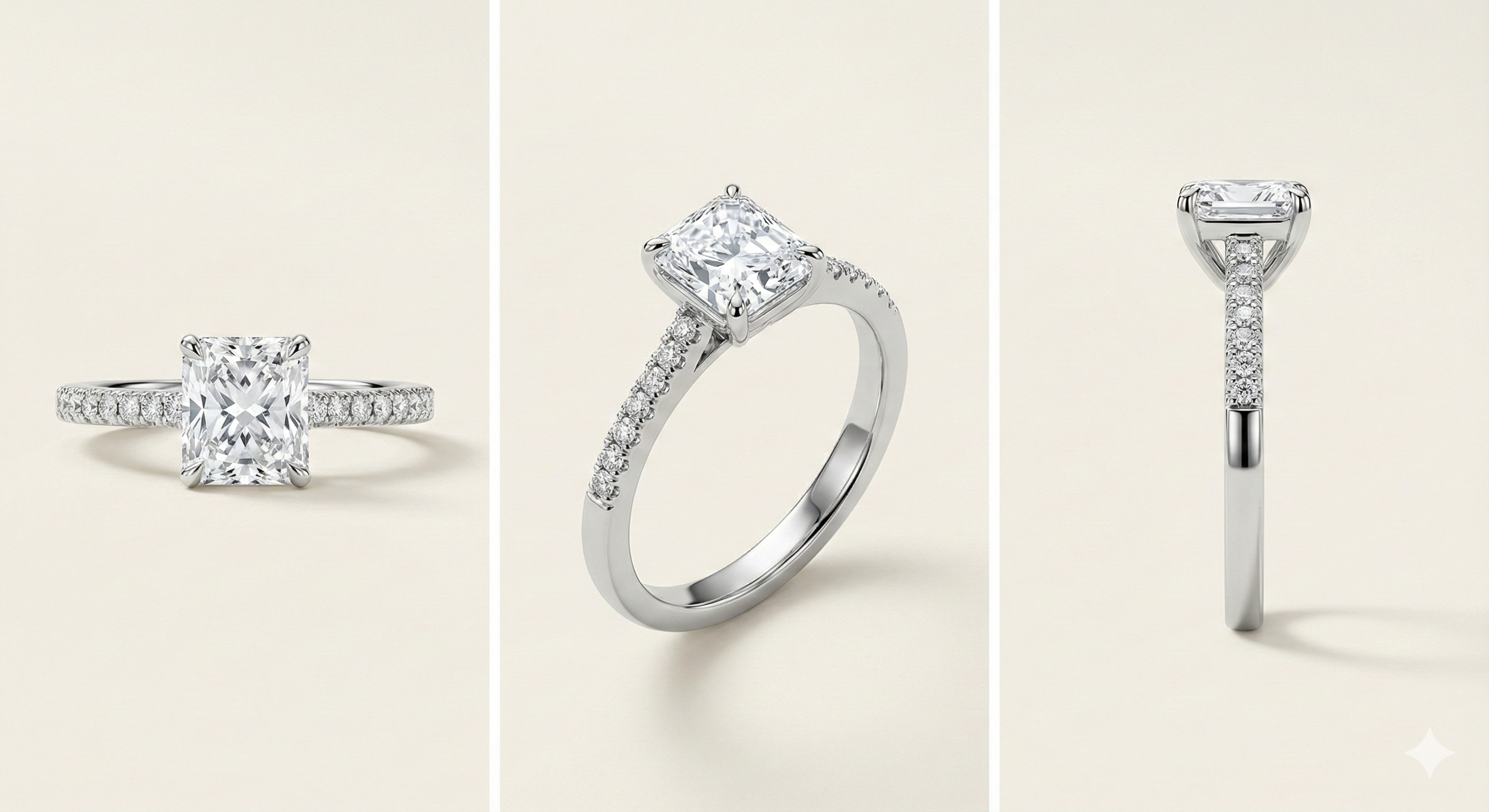
How to Decide the Thickness of a Pavé Engagement Ring (1.6mm, 1.8mm, 2.0mm, 2.2mm)
Choosing the right pavé ring thickness is one of the most important—and most misunderstood—decisions in bespoke engagement ring design. Many couples focus on centre stone size first, but band width has a direct impact on durability, comfort, visual balance, and how well the ring ages over time.
In our Singapore studio, pavé thickness is one of the first technical decisions we guide clients through during the ring customisation process. The difference between 1.6mm and 2.2mm may sound negligible on paper, but on the hand it changes how secure the diamonds feel, how the centre stone is framed, and how confidently the ring can be worn daily in a hot, humid climate.
What Pavé Ring Thickness Actually Refers To
Pavé thickness refers to the visible width of the band when viewed from the top. It does not include band height, centre stone size, or overall ring profile. Thinner pavé bands require smaller diamonds, shallower seats, and finer metal work. Thicker bands allow for deeper pavé setting, stronger bead structure, and better long-term durability.
This distinction matters because pavé rings are exposed to constant friction, knocks, and resizing stress over decades of wear—particularly in made-to-order engagement rings designed for daily use.
1.6mm Pavé Band – Ultra Delicate Aesthetic
Best for: Petite hands, minimal designs, centre stones up to ~1.0ct
- Extremely fine and airy appearance
- Makes the centre diamond appear larger
- Least forgiving structurally over time
A 1.6mm pavé band is chosen primarily for aesthetics. The pavé diamonds are very small, and the surrounding metal is thin. While it can look beautiful when new, it offers the least margin for wear, impact, or future resizing. We only recommend this thickness when clients fully understand the trade-off between delicacy and longevity during a design consultation.
1.8mm Pavé Band – Delicate but Practical
Best for: Clients who want refinement without extreme fragility
- The most popular “slim” pavé choice
- Improved diamond security over 1.6mm
- Comfortable for everyday wear
At 1.8mm, pavé diamonds can be seated deeper with stronger beads, significantly improving durability while preserving a fine appearance. This is often the sweet spot for centre stones in the 1.2–1.8ct range and suits most finger sizes without feeling flimsy—especially when paired with thoughtful diamond cut and shape selection.
2.0mm Pavé Band – Balanced and Timeless
Best for: Long-term daily wear, centre stones ~1.5–2.5ct
- Excellent structural integrity
- Allows for cleaner pavé alignment
- Balances delicacy with confidence
2.0mm is where pavé becomes truly worry-free for most clients. There is enough metal to protect pavé diamonds, maintain symmetry, and withstand resizing if needed in the future. Visually, it still reads as elegant rather than thick, especially once set with a larger centre stone chosen through our diamond education process.
2.2mm Pavé Band – Substantial and Secure
Best for: Larger hands, higher carat centres, maximum durability
- Strongest pavé structure
- Ideal for daily, active lifestyles
- More visible metal presence
A 2.2mm pavé band offers the highest level of durability and diamond security. It is often chosen for clients with larger fingers or centre stones above 2.5ct. While it reads slightly bolder on the hand, it ages exceptionally well and is frequently recommended in custom engagement ring designs intended for lifelong wear.
Should You Taper a Pavé Ring?
Tapering means gradually narrowing the band as it approaches the centre stone. When done correctly, tapering improves comfort and visual flow without sacrificing strength.
When tapering works well:
- Starting at 2.0–2.2mm and tapering to ~1.8mm near the centre
- Highlighting the centre stone without making the band look thin
- Creating a softer, more elegant transition
When tapering should be avoided:
- Starting at 1.6–1.8mm (too little metal left)
- Excessive taper that compromises pavé security
- Very small pavé diamonds near the centre stone
In most bespoke designs, we prefer subtle tapering rather than dramatic narrowing. The goal is balance—not fragility—especially in handcrafted pavé engagement rings.
Quick Thickness Recommendation Guide
- Minimal look, occasional wear: 1.6mm (with caution)
- Delicate daily wear: 1.8mm
- Best all-round choice: 2.0mm
- Maximum durability: 2.2mm
Final Advice
Pavé thickness is not about choosing the thinnest band possible—it is about choosing the thinnest band that will last beautifully for your lifestyle, finger size, and centre stone. A well-designed pavé ring should feel secure, comfortable, and visually balanced from every angle.
If you are unsure between two widths, err on the side of strength. A fraction of a millimetre makes a significant difference over a lifetime of wear—something we emphasise throughout our bespoke ring creation process.