Emerald Cut Engagement Rings in Singapore: What to Check
An emerald-cut engagement ring suits someone who prefers broad, geometric flashes to the finer sparkle of a brilliant cut. Choose the individual stone by how it looks in normal lighting, then check its dimensions, clarity, colour and the setting around it. A high clarity grade or an attractive length-to-width ratio is only part of that decision.
For a bespoke ring in Singapore, compare the complete ring quote and try the shape on your hand before deciding how much of the budget to put into size, specifications or design.
What Actually Makes an Emerald Cut Different
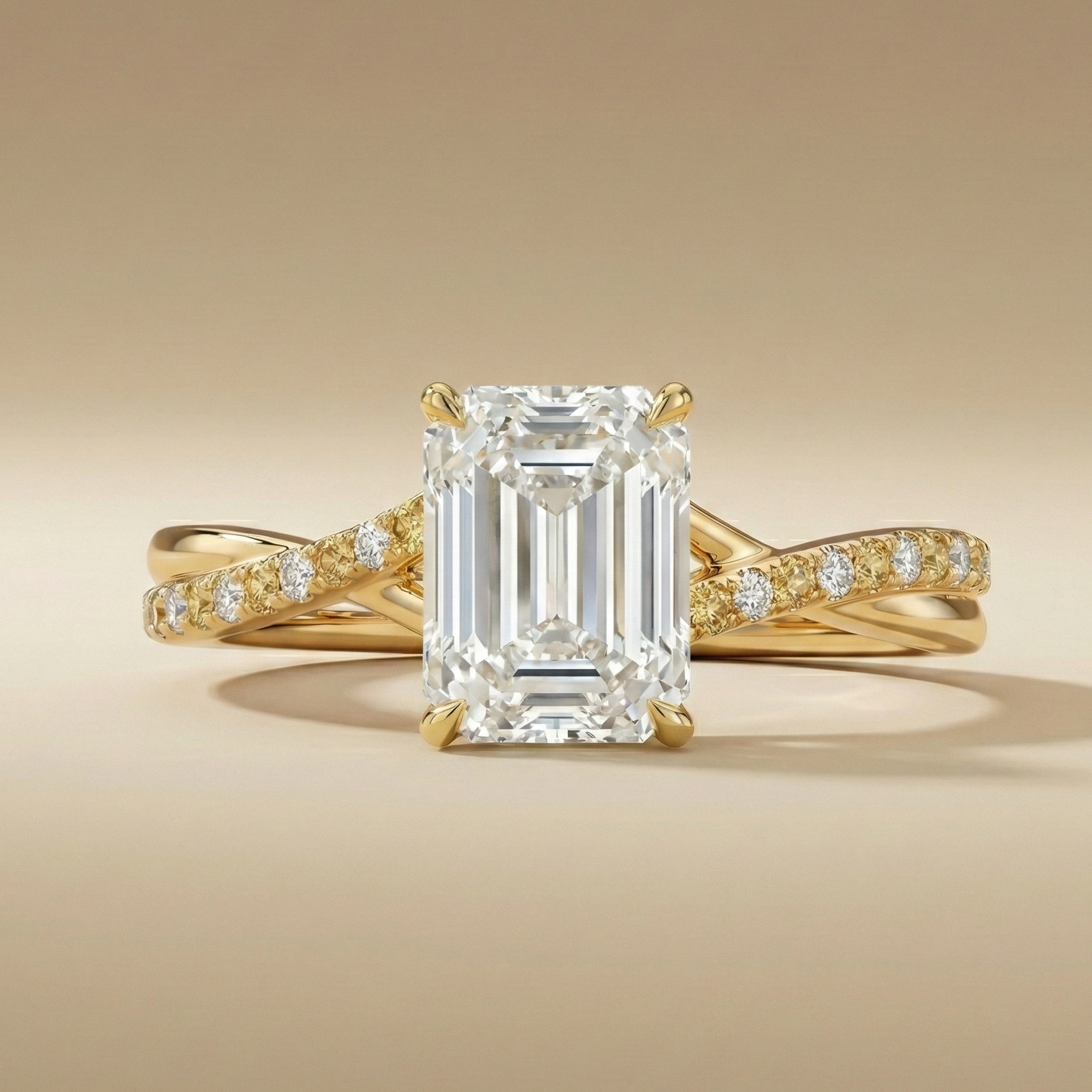
Most popular diamond shapes — round, oval, pear, cushion — are brilliant cuts. They're designed with a large number of small, angled facets that maximise light return and sparkle. An emerald cut is a step cut. It has long, rectangular facets arranged in parallel steps, like the inside of a hall of mirrors.
The result is a completely different visual effect. Where a brilliant cut scatters light into hundreds of tiny flashes, an emerald cut produces broad, sweeping reflections — what gemologists call the "hall of mirrors" effect. It's elegant, architectural, and unmistakably calm.
Those open facets can make some inclusions and body colour easier to notice. Inspect the individual stone before deciding.
Inspect Clarity in the Actual Stone
An emerald cut's open step facets can make inclusions easier to notice than in a brilliant cut. The effect depends on the inclusion's size, position and contrast, as well as the diamond's size and cutting. A clarity grade describes the laboratory assessment; it does not replace an unaided-eye inspection.
Ask to see the diamond face-up at a normal viewing distance, then examine any characteristics under magnification with the jeweller. Check whether a visible feature bothers you and whether its position has any durability implications. A higher grade may be your preference, but do not pay for it solely on the assumption that every lower-grade stone will look included.
For natural and laboratory-grown diamonds, confirm the origin and report type, and compare the actual stones. Our diamond report guide explains what a report can help you verify.
Compare Colour With the Intended Metal
Step-cut facets can make body colour easier to notice. Compare shortlisted diamonds beside one another in similar neutral lighting and discuss the metal colour you intend to use. Warmth that one person enjoys may be distracting to another.
White metal can make a warmer stone's colour more apparent; yellow or rose gold changes the overall colour balance. There is no single minimum colour grade that works for every emerald-cut ring. Choose the appearance you prefer in the complete design rather than relying on a fixed grade threshold.
Use Dimensions Alongside Length to Width Ratio
Divide the diamond's length by its width to understand its outline. For example, an 8.0 by 5.5 mm stone has a ratio of about 1.45. A higher ratio usually means a longer, narrower outline; the ratio itself does not describe cut quality.
Compare actual length and width, not just carat weight or ratio. Two stones can share a ratio but cover very different amounts of the finger. Try compact and elongated examples on your hand, then consider the whole ring's proportions. Neither shape is automatically more flattering.
Square step-cut diamonds may be described as square emerald or Asscher cuts. Check the shape and cutting description on the report and look at the facet pattern rather than using cropped corners alone to identify the cut.
Settings That Work Well With Emerald Cuts
The elongated, geometric shape of an emerald cut suits certain settings better than others.
Four-claw solitaire — The most classic choice. Four claws can keep the outline visible. Check how the claws protect the corners and how the basket sits on the hand.
East-west solitaire — Rotating the stone 90 degrees so it sits horizontally across the finger gives the ring a modern, architectural look. It's less common, which makes it distinctive. Works especially well with longer ratios.
Pave band — A thin pave band flanking an emerald cut solitaire adds presence without competing. The contrast between the stone's clean geometry and the sparkle of the side stones reads well in person. Compare band widths on the hand and retain enough substance for the design and intended wear.
Three-stone — An emerald cut flanked by two tapered baguettes is one of the most sophisticated combinations in jewellery. The parallel step-cut facets of the baguettes echo the main stone, creating a cohesive, art deco sensibility. If you want something with presence, this is worth considering.
Bezel setting — A full bezel gives the ring a sleek, minimal look and protects the stone's edges, which on an emerald cut are its most vulnerable points. Suits a contemporary aesthetic well.
Emerald Cut vs Asscher Cut
If you're drawn to step cuts, you'll likely encounter both. The key differences:
An emerald cut is rectangular with cropped corners. An Asscher cut is square with more deeply cropped corners, giving it an almost octagonal outline. The Asscher has a distinctive square "X" pattern visible when you look straight down into the stone — a result of its deeper pavilion and more dramatic step arrangement.
Compare both shapes on the hand; their outlines and facet patterns create different impressions.
Compare Complete Quotes in Singapore Dollars
Ask for a current quote for the shortlisted diamond and the finished setting. A useful comparison identifies natural or laboratory-grown origin, the report and stone measurements, metal, side stones and agreed design work. Check whether GST and any requested extras are included.
A headline price for a one-carat emerald cut is not enough to compare two offers. The individual diamond, supplier availability and setting can materially change the total. Request alternatives within the same spending limit and compare what changes, rather than assuming a fixed percentage saving for laboratory-grown stones.
Keep a copy of the agreed specifications and ask how long the quote remains valid. This gives you a clearer basis for deciding between a larger stone, a higher specification or a more detailed setting.
Commissioning a Bespoke Emerald Cut Ring in Singapore
Emerald cuts are well-suited to bespoke work because their geometry gives designers clear lines to work with. Whether you want a minimal four-claw solitaire on a plain platinum band or a three-stone with tapered baguettes and a pave wrap, the design process is usually straightforward.
At Diamond Ateliers, we work with you to select the stone first — reviewing cut quality, clarity, colour, and proportions before anything is made — and then design the setting around it. Production is typically four to six weeks after design approval and diamond selection. Allow additional time for consultation, sourcing, revisions and fitting, and confirm the collection date for your commission.
If you have questions before booking, contact us — most clients do that first, and we're happy to answer without any obligation.
Or, if you're ready to come in, book a free consultation at our showroom at The Centrepoint, Orchard Road.