Anatomy of an Engagement Ring: A Complete Guide for Singapore Buyers
Understanding the anatomy of an engagement ring is essential if you’re designing or buying one in Singapore. Every component — from the centre stone to the hidden structural details — affects durability, comfort, sparkle, and long-term value. At Diamond Ateliers, we see many couples focus only on diamond shape or carat size, but the true quality of a ring lies in how all parts work together. This guide breaks down each element of an engagement ring clearly and practically, using real bespoke design considerations we apply daily in our Singapore studio. Whether you’re comparing ready-made rings or planning a fully custom design, knowing the anatomy helps you make confident, informed decisions.
The Main Components of an Engagement Ring
Centre Stone
The centre stone is the visual and emotional focal point of the ring. In Singapore, lab grown diamonds are increasingly preferred for their value, clarity, and ethical transparency. If you’re comparing lab-grown vs natural, cut quality, or certification, start with our diamond guide. Shape (round, oval, cushion, emerald), carat weight, and cut quality all influence brilliance more than size alone.
Setting
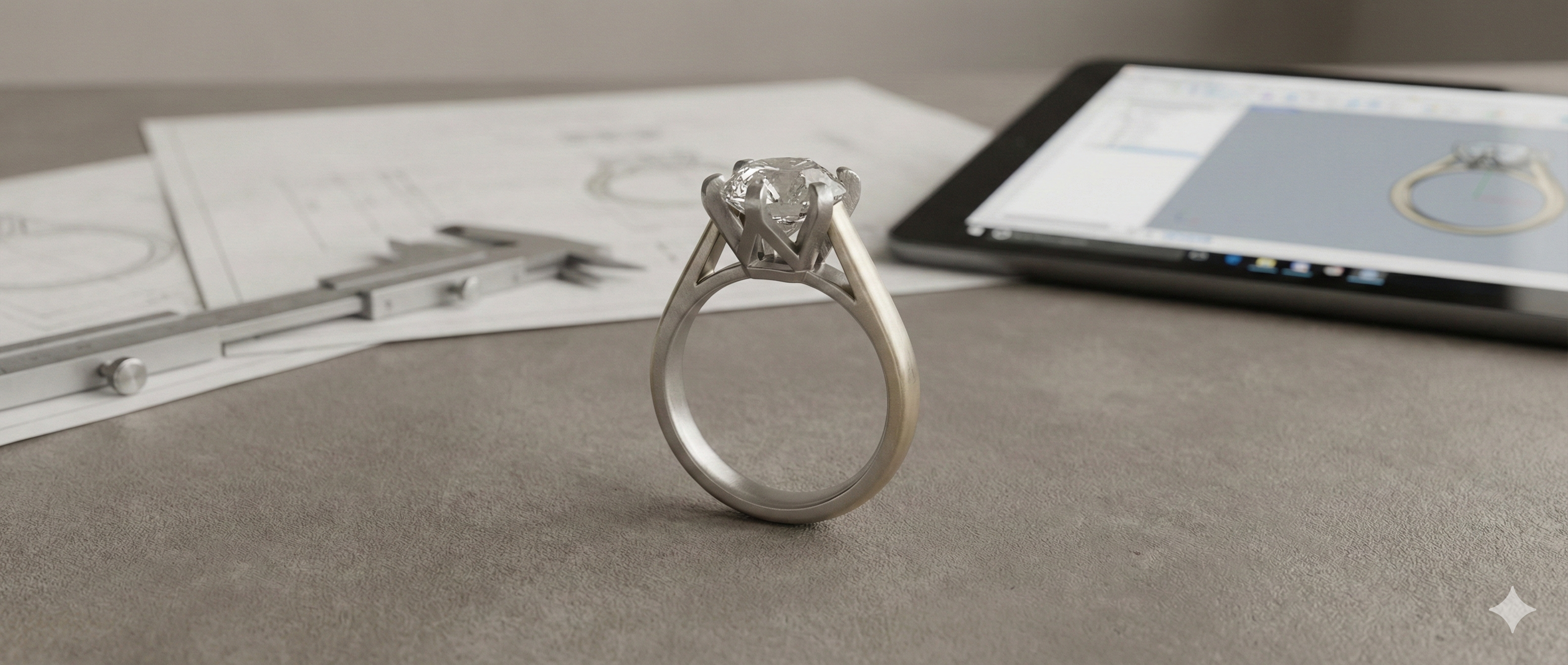
The setting secures the centre stone and defines the ring’s overall style. Common types include prong, bezel, halo, and cathedral. Structurally, the setting determines how protected the diamond is during daily wear. Learn how different silhouettes and construction choices affect wearability in our ring education. At Diamond Ateliers, settings are engineered in-house using 3D modelling to balance protection with light performance.
Band (Shank)
The band forms the circular structure around the finger. Width, thickness, and metal choice directly affect comfort and longevity. Slim bands (1.6–1.8mm) offer a delicate look but must be reinforced properly, while wider bands provide durability and balance for larger centre stones.
Hidden Structural Elements Most Buyers Miss
Prongs
Prongs hold the centre stone in place. The number (usually four or six), shape (claw, round, talon), and thickness affect both security and appearance. Poorly engineered prongs are one of the most common causes of stone loss in engagement rings.
Gallery
The gallery is the space beneath the centre stone. A well-designed gallery improves light return and reduces unnecessary metal weight, helping the ring remain comfortable for daily wear.
Bridge
The bridge connects the head of the ring to the band. This hidden element adds structural strength and prevents long-term bending, especially in higher-set designs.
Shoulders
The shoulders are the upper portions of the band that lead toward the centre stone. They may be plain, tapered, or set with side stones to enhance balance and visual flow.
Metal Choices and How They Affect Ring Anatomy
Metal selection changes how each component is engineered:
- Platinum: Dense, durable, ideal for prongs and long-term wear
- 18K White Gold: Bright appearance, lighter feel, requires periodic maintenance
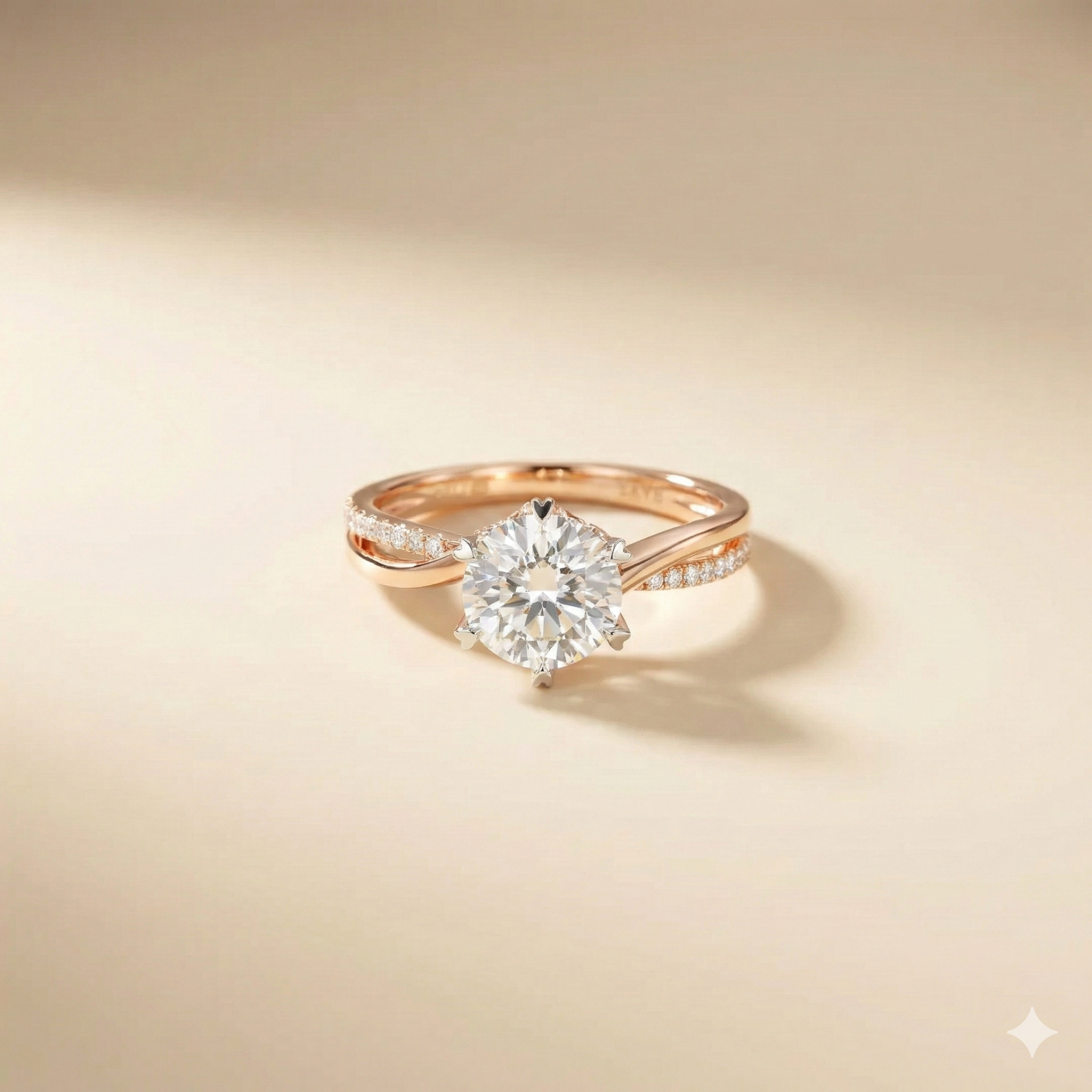
- 18K Yellow or Rose Gold: Softer aesthetic, often paired with white metal prongs for contrast
Metal choice directly impacts prong thickness, band width, and overall structural integrity.
How Anatomy Impacts Comfort and Daily Wear
A well-designed engagement ring should sit low enough to avoid snagging, feel balanced on the finger, and maintain structural strength over decades. Details such as inner band curvature and weight distribution are addressed during bespoke design. For fit changes over time, see our aftersales care and resizing guidance.
Real Diamond Ateliers Bespoke Examples
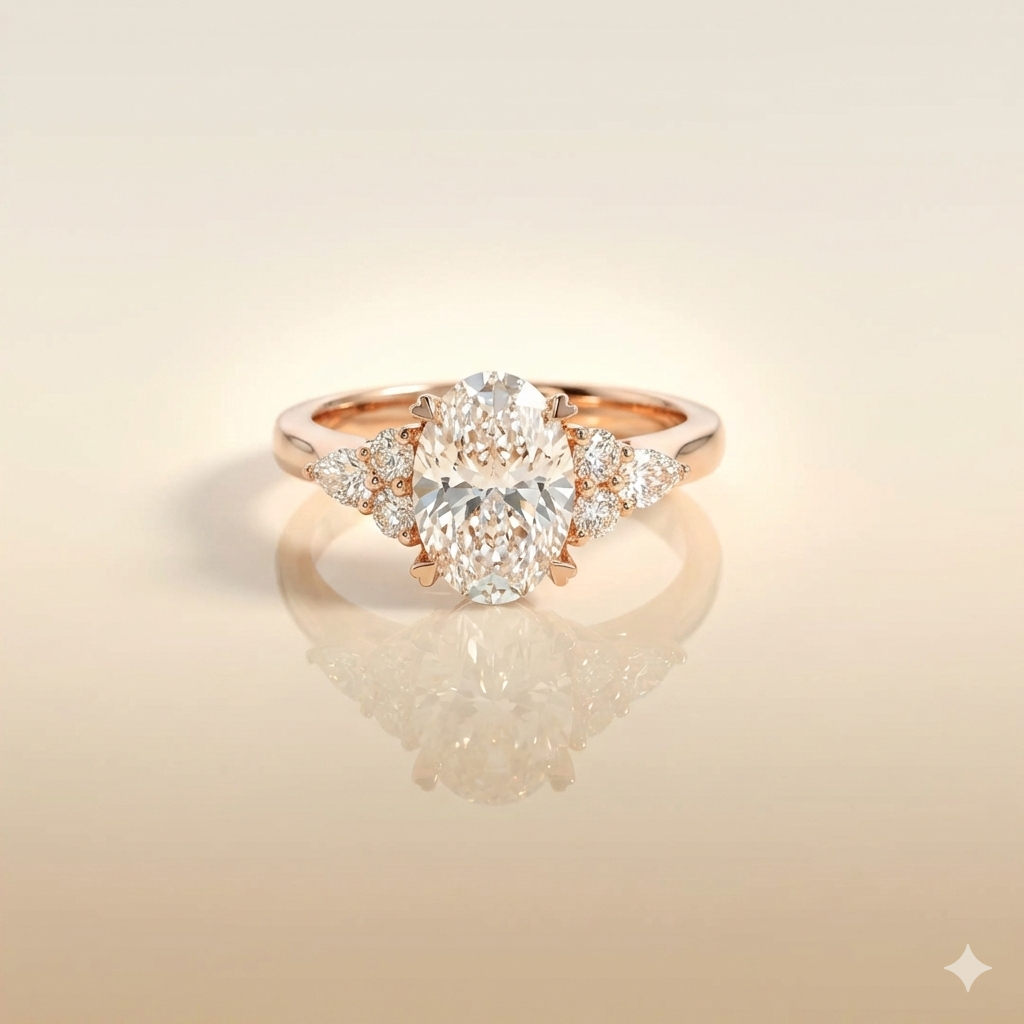
In our Singapore studio, we design 80–100 bespoke rings monthly. A common example is an oval lab grown diamond set in a four-prong platinum cathedral setting with a hidden bridge for reinforcement. This anatomy allows maximum sparkle while maintaining durability for everyday wear.
Another popular design is a bezel-set emerald cut diamond with a slightly wider band, prioritising protection and clean architectural lines.
How to Choose the Right Ring Anatomy for You
- Prioritise cut quality over carat size
- Choose a setting height that fits your lifestyle
- Ensure prongs and bridges are structurally engineered, not decorative
- Select metal based on durability, not just colour
If you’re unsure how these elements come together, a consultation through our bespoke engagement ring process makes the differences immediately clear.
Why Bespoke Design Matters in Singapore
Off-the-shelf rings rarely optimise anatomy for individual preferences. Bespoke design allows every visible and hidden component to be engineered specifically for your diamond, finger size, and lifestyle, creating long-term value and durability. For transparency on typical lab-grown and natural pricing ranges, you can also refer to our diamond price guide.
Book a Consultation
If you want an engagement ring designed with the right anatomy from the start, speak directly with our founder-led team. We’ll walk you through each component and design a ring that lasts.
Book a private consultation in our Singapore studio.
— Diamond Ateliers