Why Wax Moulds Take Time in a Custom Engagement Ring (And Why That’s a Good Thing)
In custom engagement ring design, speed is often mistaken for efficiency. Clients sometimes ask why a bespoke ring takes longer than choosing a ready-made setting — especially when they hear terms like 3D rendering and wax mould.
The short answer: a wax mould is not a shortcut. It’s a precision checkpoint.
At Diamond Ateliers, every true bespoke ring follows a deliberate sequence: design → render → test → refine. Skipping steps saves time, but it also removes control. This article explains what a wax mould actually is, why it comes after 3D rendering, and why the extra time protects the final ring. For a full overview of how this fits into our ring creation workflow, see our bespoke engagement ring process.
Step 1: 3D Rendering — Designing the Ring Before It Exists
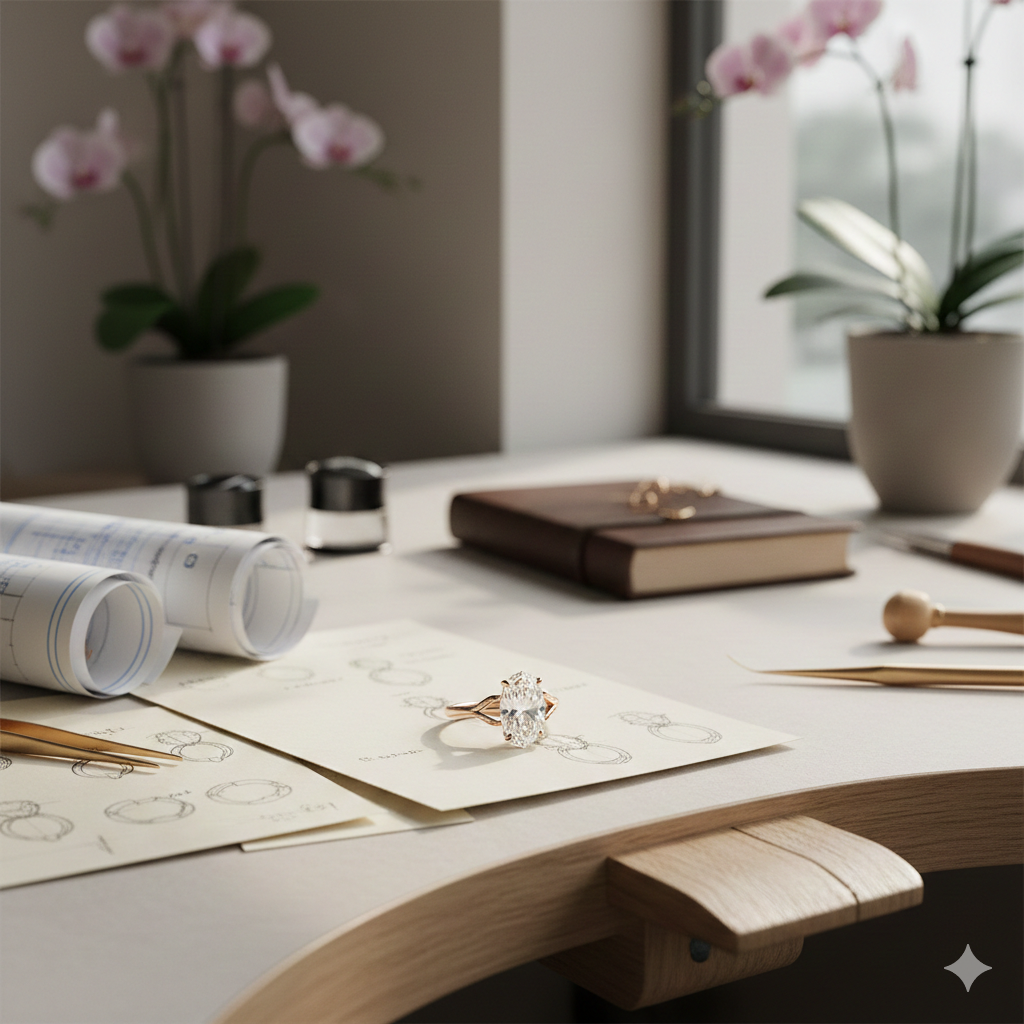
Every bespoke engagement ring begins digitally. The 3D render allows us to design the ring around the actual diamond — not the other way around. This approach ensures that the setting complements the stone’s proportions, cut, and visual balance from the start.
At this stage, we define:
- Basket height and stone depth alignment
- Prong scale and symmetry
- Band width, taper, and shoulder balance
- Lift height and centre-of-gravity
A render lets clients visualise proportions, but more importantly, it lets us engineer the ring before any metal is involved. Changes here are precise, reversible, and intentional — unlike post-casting alterations. If you’re unfamiliar with how different structures affect a ring’s look, our ring education guide explains how design choices influence wearability and aesthetics.
Step 2: Wax Mould — Turning Design Into Physical Reality
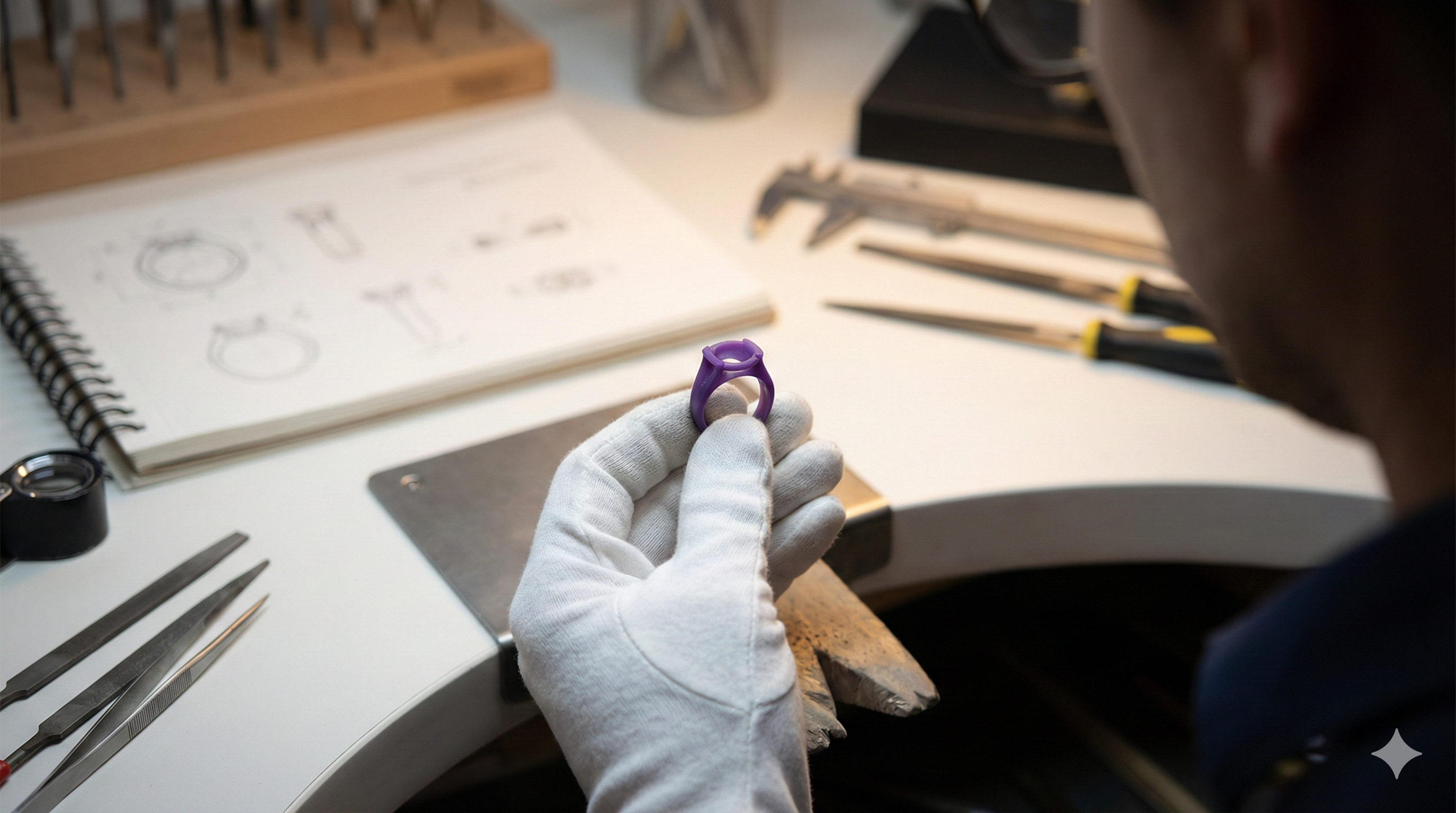
Once the 3D design is approved, the ring is printed in wax. This wax mould is a full-scale physical version of the ring before it is cast in precious metal.
The purpose of the wax mould is not speed. It exists to answer one question:
Does the ring work in real life?
Holding the wax reveals things no screen can:
- True thickness and edge comfort
- Prong feel and spacing
- Overall balance when worn on a finger
- Whether proportions feel elegant or bulky
If adjustments are needed, we return to the digital stage, refine the design, and reprint. This back-and-forth is where time is spent — and where mistakes are prevented. It’s also why true bespoke work differs fundamentally from modified catalogue settings.
Why Wax Moulds Add Time (And Remove Risk)
A wax mould slows the process because it forces decisions to be made correctly.
Without a wax stage, rings go straight from screen to metal. Any misjudgement — prong thickness, band comfort, lift height — becomes expensive, irreversible, or compromised.
With a wax mould:
- Proportions are tested, not guessed
- Comfort is evaluated before casting
- Design intent is locked in physically
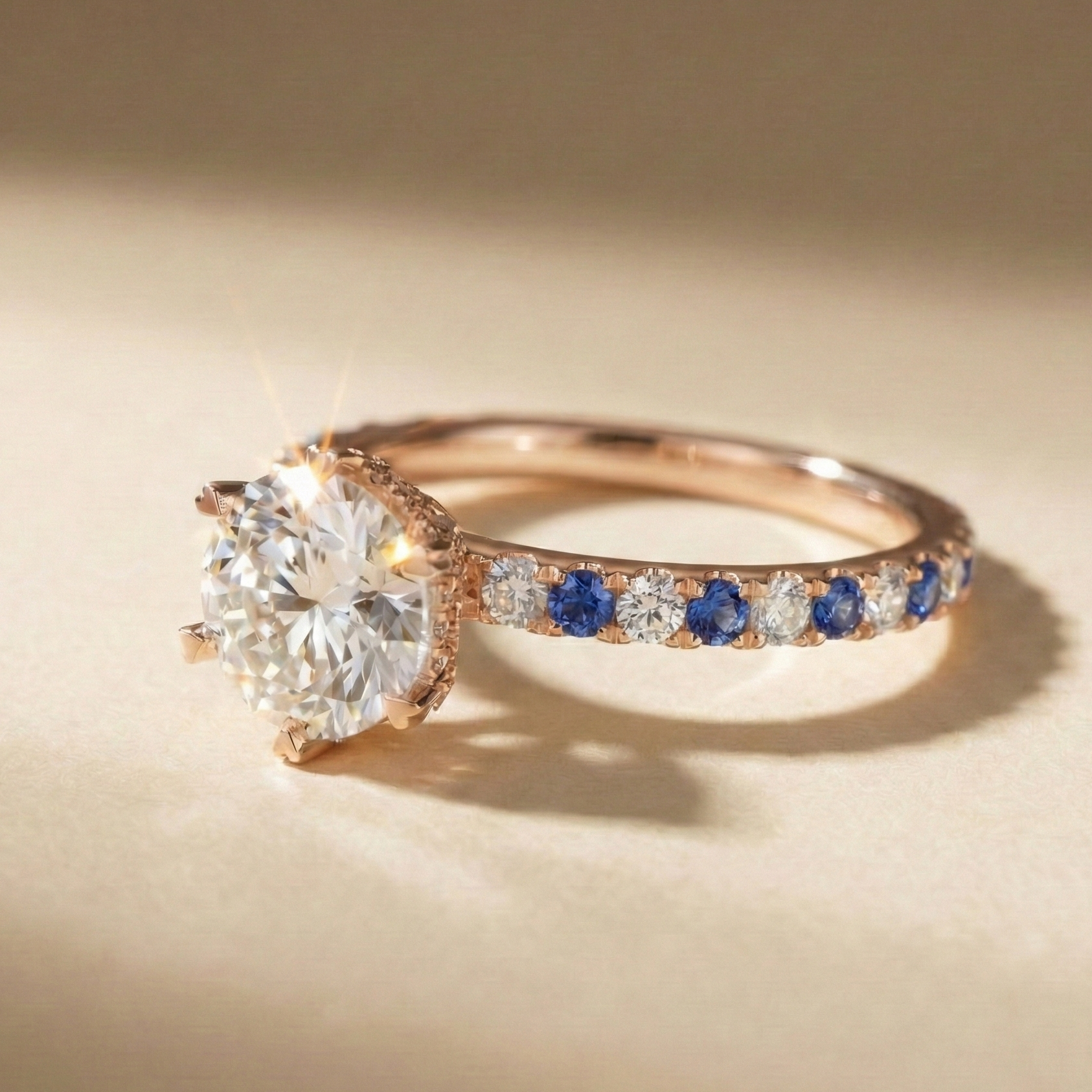
This is why bespoke rings take longer than catalogue pieces. The time isn’t spent waiting — it’s spent verifying. Learn more about why made-to-order rings require this level of validation in our custom engagement ring guide.
Why Not All “Custom” Rings Use Wax Moulds
Many jewellers label catalogue modifications as “custom” while skipping the wax stage entirely. This allows for faster turnaround, but it also means the ring is never physically tested until it is already made in gold or platinum.
True bespoke work accepts time as part of craftsmanship. A wax mould is not mandatory for selling a ring — it’s mandatory for controlling the outcome.
In Bespoke, Time Is a Feature
A custom engagement ring is worn every day, for decades. The extra time spent in rendering and wax moulding exists to protect that experience — not to delay it.
When a ring feels balanced, comfortable, and visually right from day one, that’s not luck. It’s process.
In bespoke jewellery, time isn’t wasted. It’s invested.
If you’re considering a custom ring and want to understand how these stages affect the final result, explore our bespoke engagement ring process or book a private design consultation with our team.