Prong Tips Explained: Heart vs Claw vs Round | Diamond Ateliers
Once clients decide on the number of prongs, the next question often feels surprisingly difficult: heart-shaped prongs, claw prongs, or rounded tips?
At a glance, prong tips seem like a purely aesthetic detail. In reality, they influence how refined the ring looks, how secure the diamond feels, and whether the setting appears delicate or heavy over time.
This guide breaks down the three most common prong tip styles — without hype, trends, or “rules” — so you can choose based on how the ring will actually be worn.
What Are Prong Tips?
Prong tips refer to the finished shape of the metal that touches the diamond. While the prong structure determines security, the tip determines refinement.
Tip style affects:
- How visible the prongs are from the top view
- Whether the diamond appears sharper or softer
- How delicate or substantial the setting feels
This decision works best when viewed as part of the entire setting system — including diamond cut, prong count, and metal thickness. If you’re still building foundational knowledge, our diamond education guide explains how structural choices influence durability and long-term wear.
This choice is best made after deciding on your prong count and setting style. If you haven’t already, it helps to understand how structural decisions work together in our guide on 4 vs 5 vs 6 prong settings.
Heart Prong Tips: Decorative but Delicate
What they look like
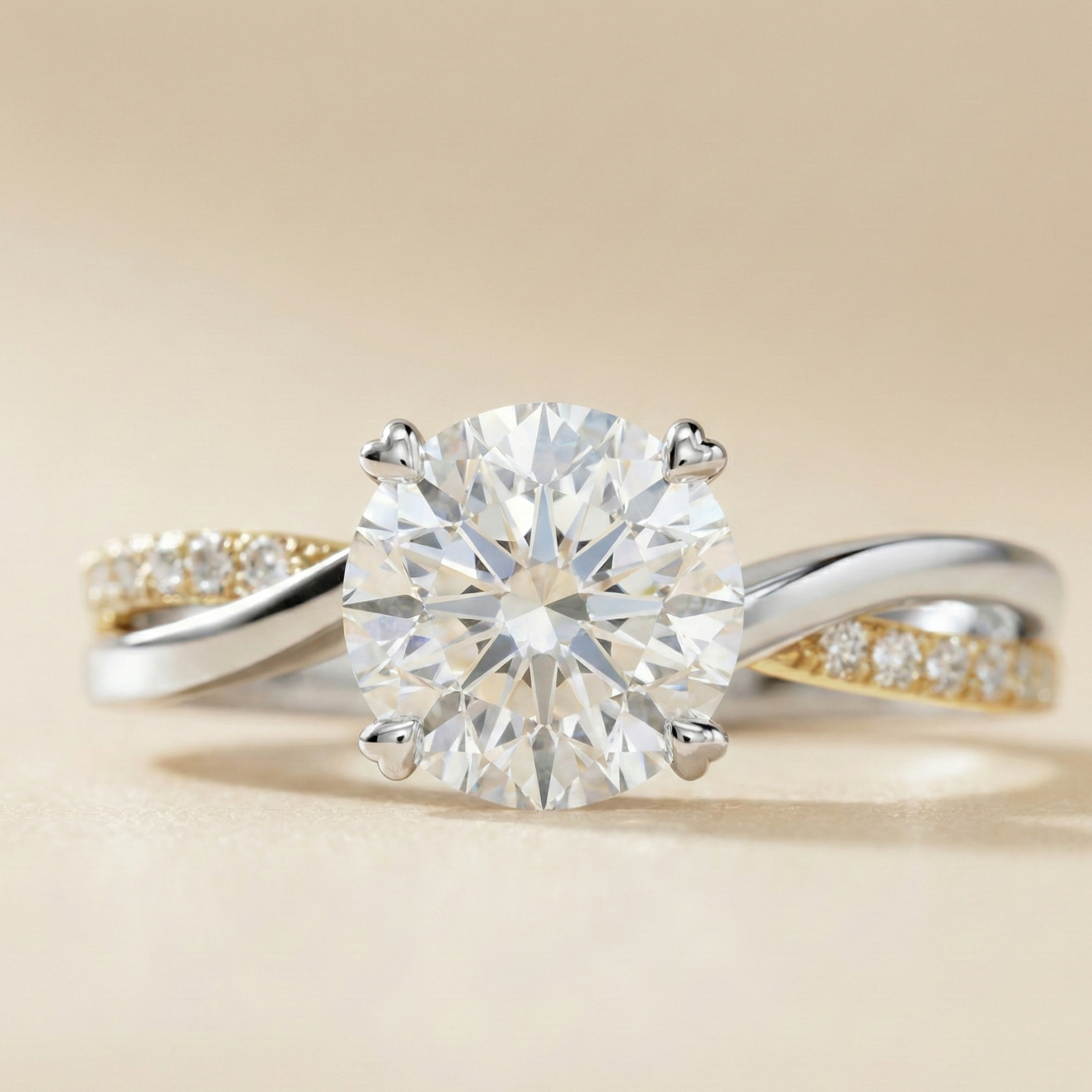
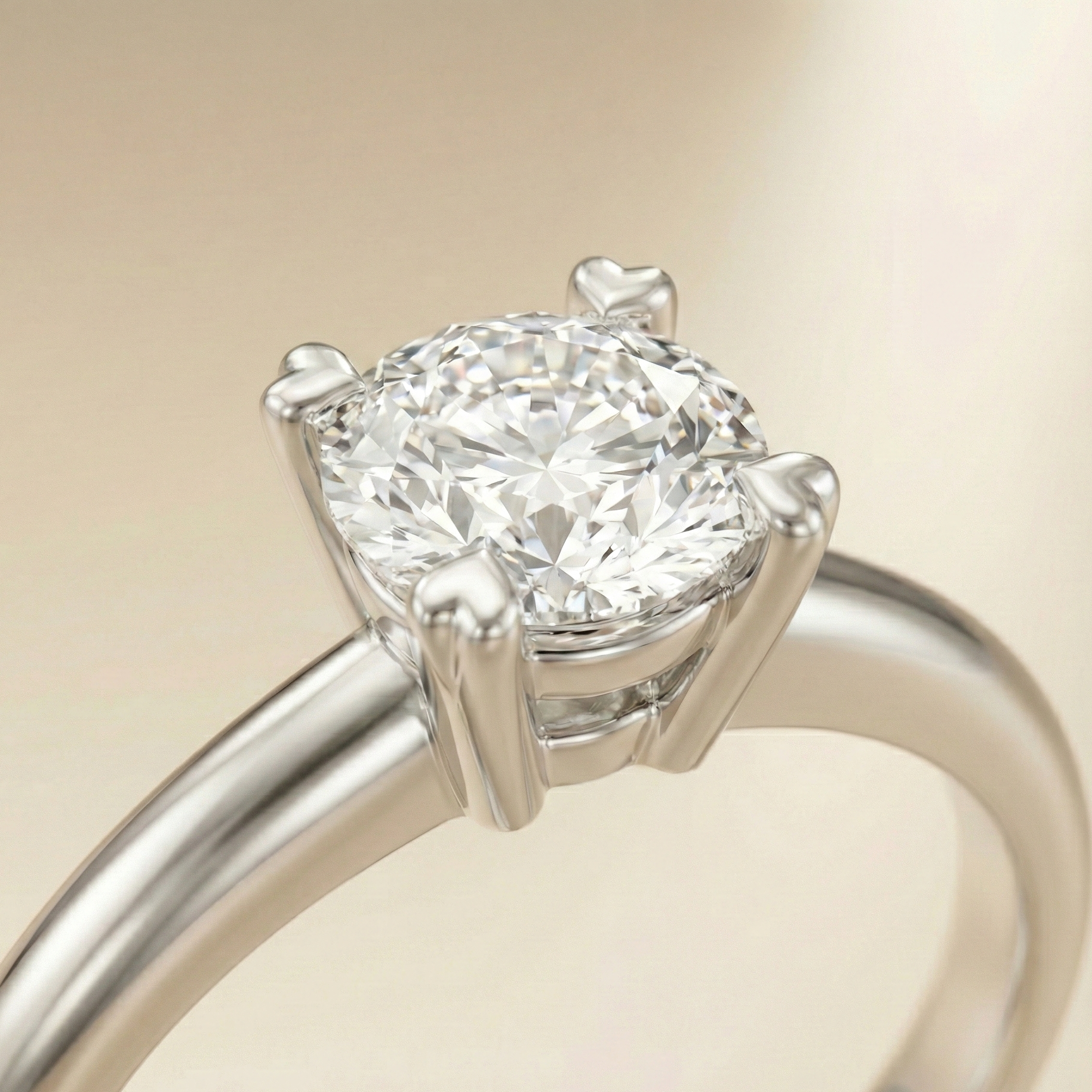
Heart prongs are shaped with a subtle cleft at the tip, forming a heart when viewed closely. They are often chosen for romantic symbolism rather than function.
Real-world considerations
Heart prongs draw attention to themselves. On smaller diamonds, this can feel charming. On larger stones, they can sometimes compete visually with the diamond rather than disappearing into it.
They also require very precise finishing. Poorly executed heart prongs can look bulky or uneven, which contributes to the issues we explain in why many engagement rings end up looking chunky.
Best suited for
- Clients who enjoy visible design details
- Romantic, expressive styles
- Rings that are not intended for heavy daily wear
Who should be cautious
- Those wanting a timeless, understated look
- Buyers prioritising durability over symbolism
Claw Prong Tips: Sharp, Minimal, and Modern
What they look like
Claw prongs taper to a fine point, gripping the diamond tightly at the edge. When done well, they almost disappear from the top view.
Why designers favour them
Claw prongs create the illusion of a larger diamond by minimising visible metal. They also sharpen the outline of the stone, which works especially well for round, oval, and cushion shapes.
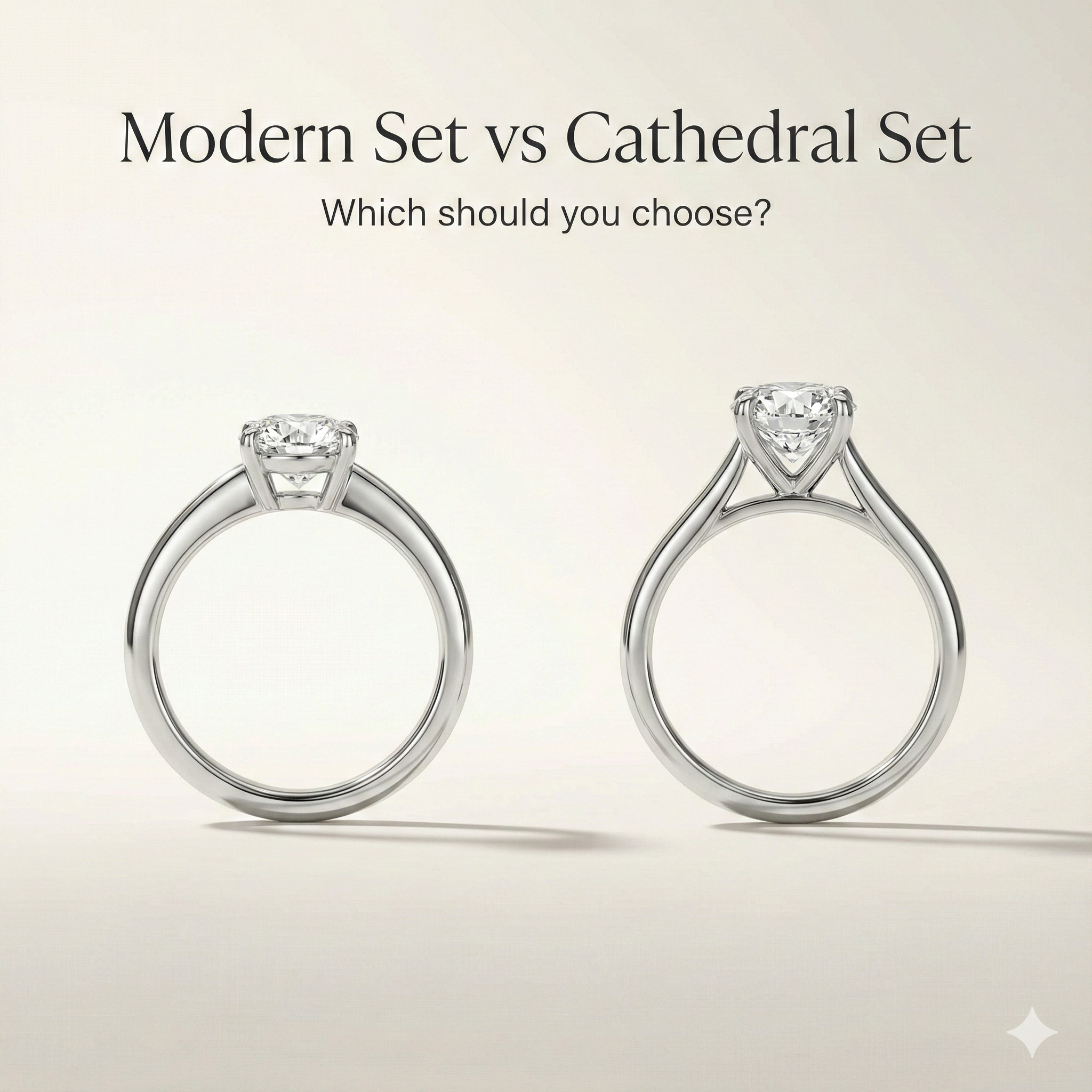
This tip style is commonly used in contemporary settings, particularly lower-profile designs discussed in our comparison of modern vs cathedral engagement ring settings.
Maintenance reality
Because claw prongs are refined and narrow, craftsmanship matters enormously. Well-made claw prongs are secure, but they do benefit from routine inspections over the years — especially for rings worn daily.
Best suited for
- Clients who want the most minimal metal presence
- Modern, clean engagement ring designs
- Those comfortable with periodic maintenance checks
Round Prong Tips: Soft, Durable, and Timeless
What they look like
Round prongs finish with a smooth, domed tip. They are the most traditional and widely used prong style.
Why they endure
Round prongs distribute pressure evenly and are less prone to catching or wearing thin over time. While they are more visible than claw prongs, they offer excellent long-term durability.
This makes them a popular choice for daily-wear rings and higher settings where comfort matters as much as appearance.
Best suited for
- Clients prioritising longevity and comfort
- Higher-set or cathedral-style designs
- Those who want a classic, low-maintenance ring
Which Prong Tip Is “Best”?
There isn’t a universally correct answer.
The best prong tip is the one that aligns with how often the ring is worn, how much maintenance you’re comfortable with, and how visible you want the metal to be.
- Heart prongs emphasise expression
- Claw prongs emphasise refinement
- Round prongs emphasise durability
What matters most is that the prong tip works harmoniously with the prong count, setting height, and diamond proportions — not as an isolated decision.
How We Guide This Choice at Diamond Ateliers
At Diamond Ateliers, we don’t recommend prong tips based on trends. We look at:
- Diamond size and shape
- Setting height and structure
- Lifestyle and daily wear habits
- Long-term comfort and maintenance expectations
Often, clients change their preference once they see the difference in proportion during the bespoke engagement ring design process. That clarity is exactly why we prototype details before finalising anything.
Final Thoughts
Prong tips are small details, but they influence how a ring ages, not just how it looks on day one.
The right choice isn’t about picking the most decorative or the most minimal option. It’s about choosing the detail you won’t think about — because it quietly does its job.
— Founder, Diamond Ateliers
Considering a bespoke engagement ring? A design consultation allows every structural detail — from prong tips to proportions — to be refined for long-term wear, comfort, and elegance.