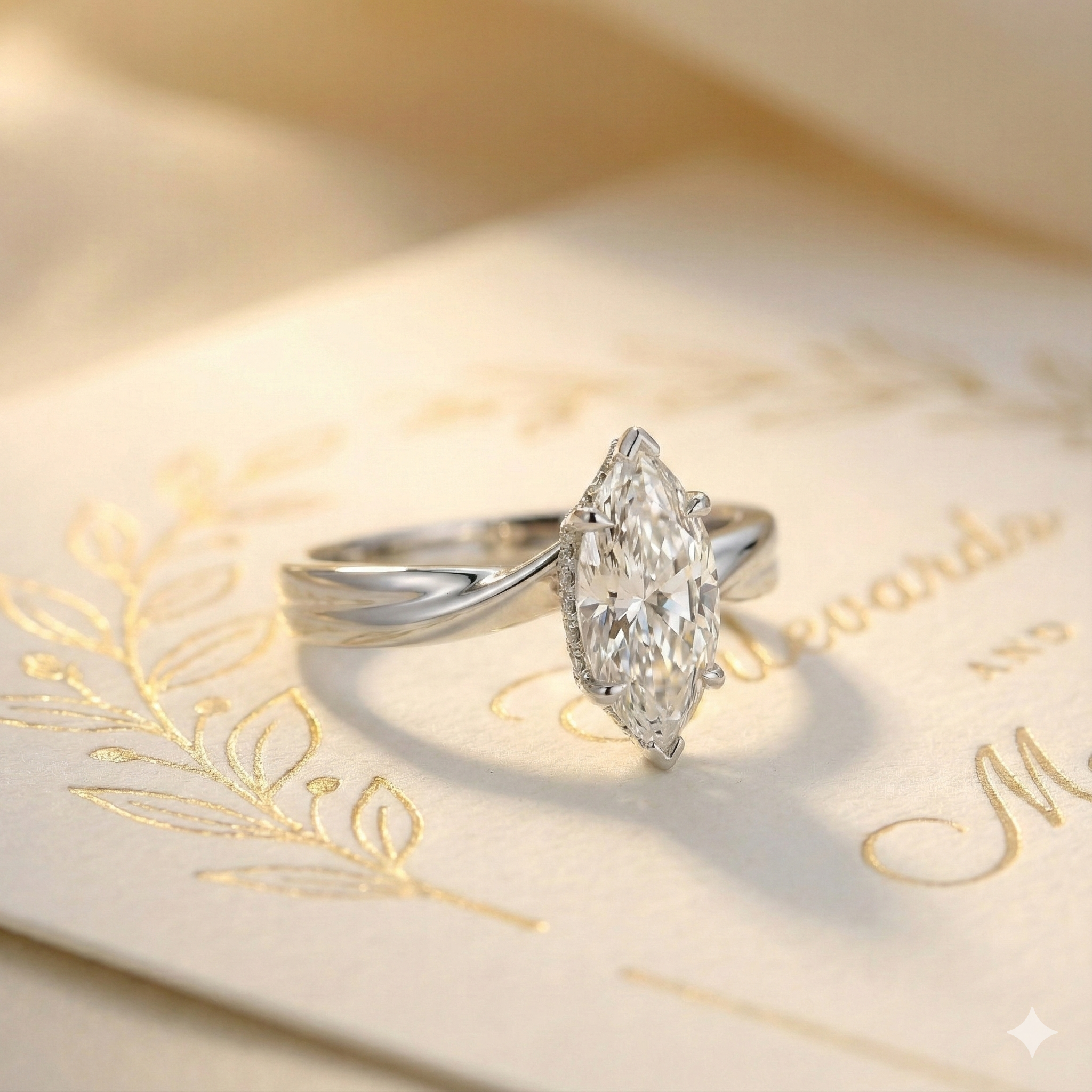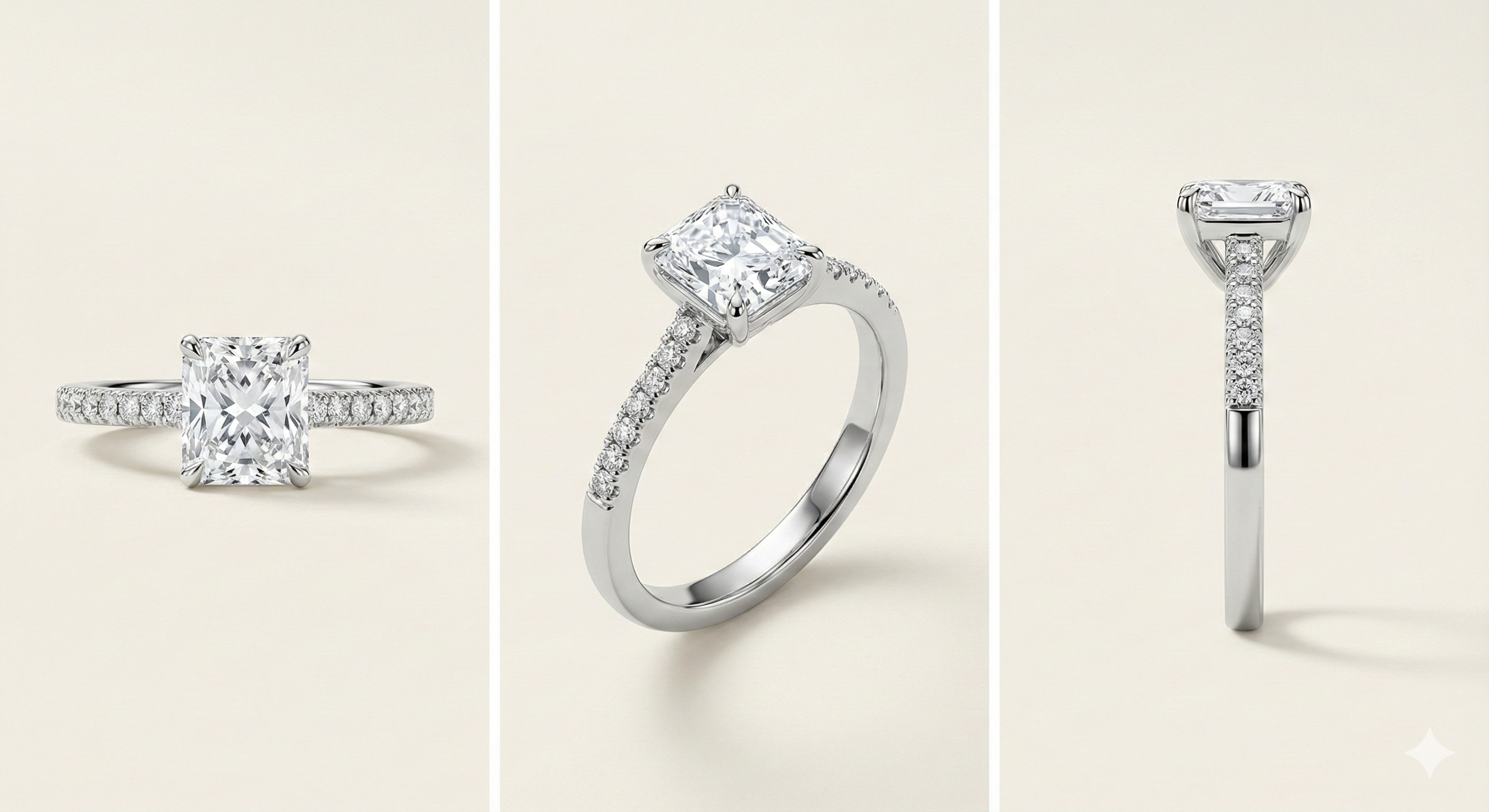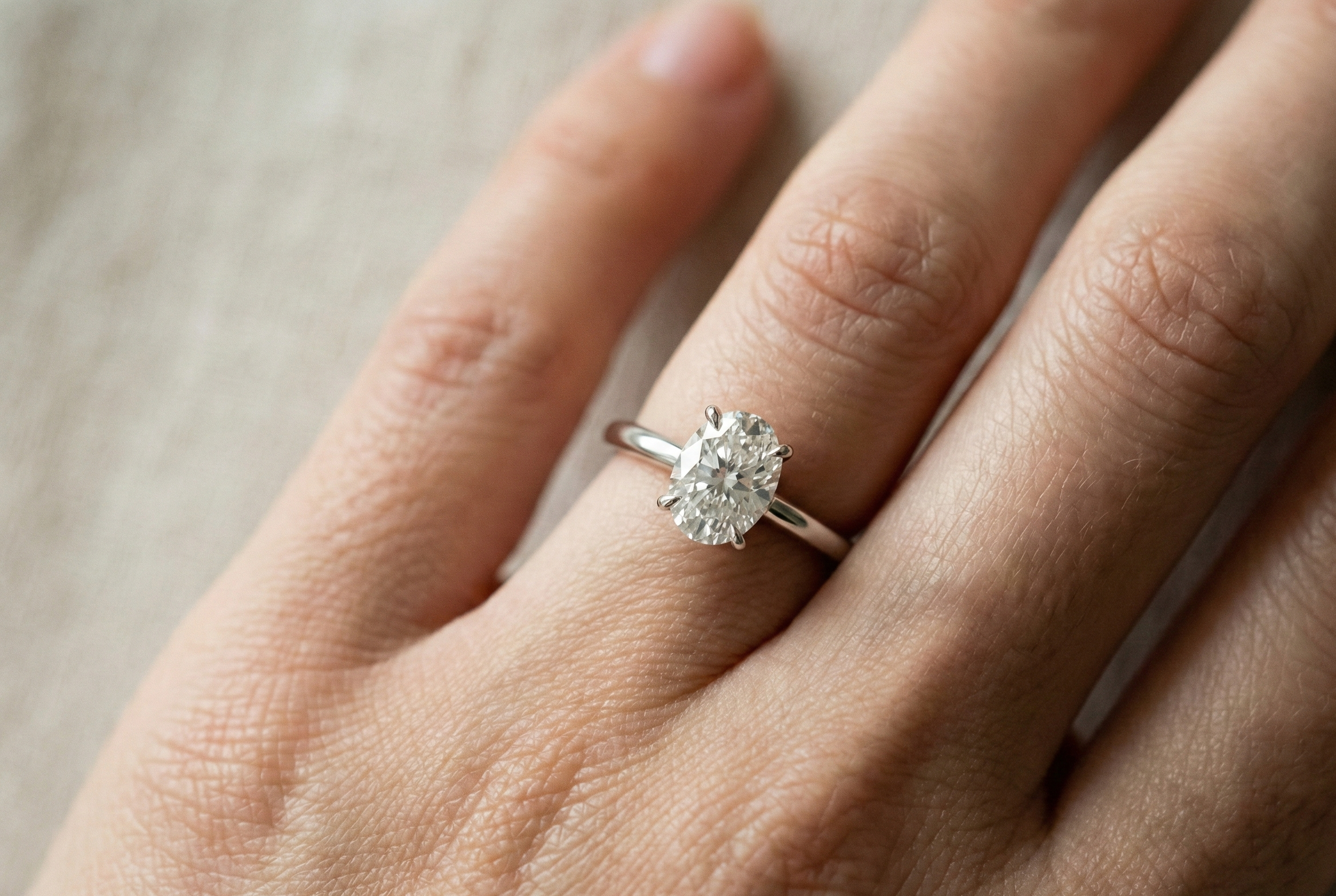
High Polish Band Thickness: 1.6 vs 1.8 vs 2.0 vs 2.2 mm (Plus Tapering & Profiles)
Choosing a high-polish band isn’t just about “dainty vs thick”. Band thickness affects durability, comfort, and how big your centre diamond looks on the hand—an effect explored further in our guide on how diamond size appears once worn. Tapering changes visual balance and finger coverage. Profile choice (flat, rounded, knife-edge) changes how the ring feels every day—especially in a high-polish finish that highlights every line and curve. Below is a practical breakdown of what truly changes at 1.6mm, 1.8mm, 2.0mm, and 2.2mm, when to taper (or not), and which profiles suit different design goals.
Band Thickness: What Changes in Real Life
1.6 mm – Ultra-Delicate
Best for: Small diamonds (≤0.5ct), occasional wear, very slim-finger aesthetics.
- Pros: Extremely dainty; minimal look; can make the centre diamond appear larger.
- Cons: Most prone to bending over time; higher maintenance; not ideal for true daily wear.
If you prioritise a very fine look above everything else, 1.6mm can work—just understand it’s a lifestyle decision. At this thickness, long-term performance depends heavily on solitaire setting design and structural support, not band width alone.
1.8 mm – Slim but Practical
Best for: 0.5–1.0ct diamonds, refined solitaires, elegant daily wear.
- Pros: Elegant and modern; visually light; materially safer than 1.6mm.
- Cons: Less ideal once you move into larger centre stones (typically >1.2ct) or more top-heavy settings.
This is a strong “slim without stress” choice for many clients, particularly when proportion and balance are carefully considered during the design stage.
2.0 mm – Balanced & Timeless
Best for: 0.8–2.0ct diamonds, daily wear, most classic settings.
- Pros: Excellent durability; feels substantial without looking bulky; works with most settings.
- Cons: Slightly less “dainty” than sub-2.0mm looks.
If you want the most reliable balance of comfort, longevity, and proportion, 2.0mm is hard to beat. This aligns closely with recommendations in our guide on choosing an engagement ring for everyday wear.
2.2 mm – Bold & Secure
Best for: Larger diamonds (≥1.5ct), statement designs, clients who want a premium feel.
- Pros: Very durable; visually balances larger stones; luxurious presence on hand.
- Cons: Can feel heavy or look wide on smaller fingers if the design isn’t proportioned carefully.
Tapered vs Non-Tapered Bands
Tapered Band
A tapered band is typically thinner near the centre stone and thicker toward the base (or sometimes the reverse, depending on the design intent).
- Why choose it: Makes the centre diamond look larger; creates a refined flow; gives finger coverage without looking bulky.
- Trade-off: Can be slightly more complex to resize later, depending on taper intensity and setting style.
Tapering is often used alongside other visual techniques that make a ring appear slimmer while maintaining structural strength.
Non-Tapered Band
A non-tapered band stays consistent in width around the ring.
- Why choose it: Clean, architectural look; simpler resizing; often easier to pair with a straight wedding band.
A consistent band width also simplifies stacking, particularly when considering how engagement rings pair with wedding bands.
Band Profiles: Flat, Rounded, Knife-Edge
Flat Profile
- Look: Modern, structured, crisp lines (high polish will emphasise this).
- Feel: More noticeable on hand; edges matter more at slimmer thicknesses.
- Best for: Contemporary designs, usually at 2.0mm and above for a confident, stable look.
Rounded Profile (Comfort-Oriented)
- Look: Classic, soft, timeless.
- Feel: Typically the most comfortable for daily wear.
- Best for: Daily wear, slimmer bands, and clients who want a ring that “disappears” on the hand.
Knife-Edge Profile
- Look: Elegant ridge line; visually sharp; can make the band look slimmer than it is.
- Feel: Comfortable when executed properly (the ridge should be refined, not aggressive).
- Best for: Clients who want a defined look without adding width; excellent at 2.0mm when you want both strength and a slim visual.
Recommended Combinations (Real-World Pairings)
- Slim & Elegant: 1.8mm × Tapered × Rounded
- Classic Daily Wear: 2.0mm × Non-tapered × Rounded
- Modern Statement: 2.2mm × Non-tapered × Flat
- Visually Slim but Strong: 2.0mm × Tapered × Knife-edge
The One Thing That Matters Most
Thickness alone doesn’t determine durability. Your long-term wear experience depends on a combination of thickness, profile geometry, setting style (especially how much metal supports the head), and how the ring is finished. High polish makes everything look cleaner—but it also makes fine details (and future wear marks) more visible. The goal is to match the design to how you actually wear your ring.