Ring Polishing in Singapore: How It’s Done, When You Need It, and When to Avoid It
Ring polishing is one of the most misunderstood aspects of jewellery aftercare. Many clients assume polishing is harmless and should be done frequently—when in reality, polishing is a controlled metal-removal process that should only be performed when necessary. At [Diamond Ateliers](chatgpt://generic-entity?number=0), where we produce 80–100 bespoke rings monthly, long-term wearability is considered from the design stage, not after problems appear.
This guide explains how ring polishing is actually done, when it should be performed, and why excessive polishing shortens the lifespan of your ring. It also clarifies how lifelong resizing works alongside responsible polishing—so clients return when it truly matters, not on a monthly basis.
What Ring Polishing Really Is (And What It Is Not)
Polishing is not cleaning. Cleaning removes dirt, oils, and residue. Polishing physically removes a thin layer of metal to restore surface smoothness and shine.
Every time a ring is polished:
- A small amount of metal is permanently removed
- Edges and corners become slightly softer
- Prongs and fine details gradually lose definition
This is why professional jewellers never recommend frequent polishing as routine maintenance.
How Ring Polishing Is Done by a Professional Jeweller
Step 1: Structural Assessment
Before any polishing begins, the ring is inspected for metal thickness, prong height, wear patterns, and previous polishing history. If polishing would compromise strength or stone security, it is not performed.
Step 2: Selective Surface Refinement
Deeper scratches may require controlled micro-abrasion. This step is targeted only to affected areas and never applied across the entire ring unnecessarily.
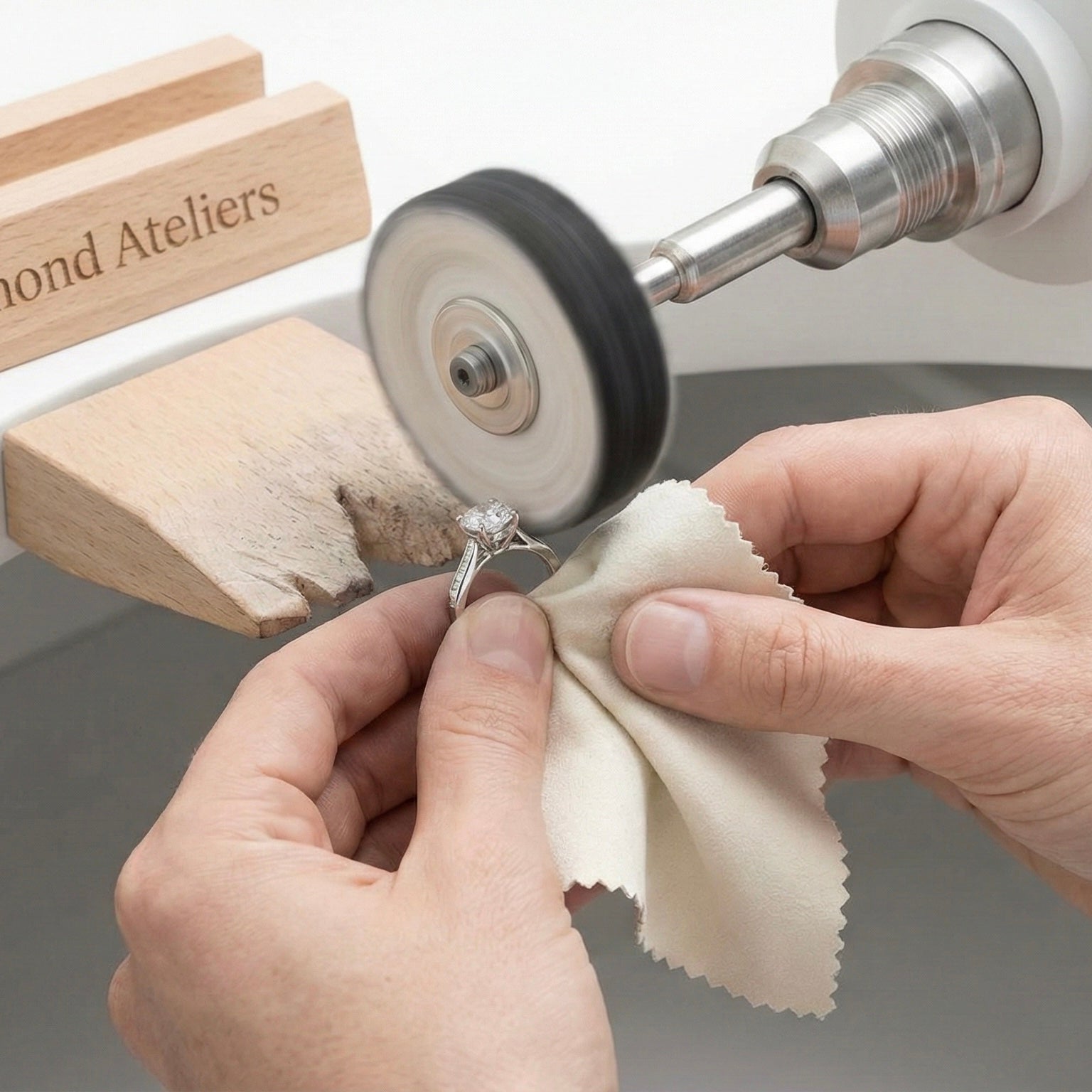
Step 3: Multi-Stage Polishing and Finishing
The ring is polished in stages using progressively finer compounds. The objective is to restore brilliance while removing the least amount of metal possible.
When Ring Polishing Should Be Done
In Singapore’s humid, high-wear environment, most engagement rings require polishing approximately every 12–24 months, depending on lifestyle and daily wear habits.
Polishing is appropriate when:
- Scratches are clearly visible at normal viewing distance
- The surface remains dull even after proper cleaning
- You are refreshing the ring for a milestone or special occasion
A ring does not need polishing simply because it no longer looks “brand new.”
When Ring Polishing Should NOT Be Done
Polishing too frequently causes long-term structural damage.
Avoid polishing when:
- Only fine hairline scratches are present
- The ring was polished recently
- Prongs are already showing signs of wear
Over-polishing accelerates metal thinning—especially at the base of the ring and around prongs, where strength matters most.
Does Polishing Damage Gold or Platinum?
Gold (Yellow, White, Rose)
Gold alloys are relatively soft. Frequent polishing rounds edges, reduces metal thickness, and weakens prongs over time.
Platinum
Platinum develops a natural patina rather than losing metal quickly. The patina is not damage and does not require immediate polishing. Polishing platinum still removes material and should be done sparingly.
Lifelong Resizing Without Encouraging Over-Polishing
Our lifelong resizing policy is designed for genuine size changes—not frequent cosmetic refreshes.
At Diamond Ateliers:
- Every resize is structurally assessed before work begins
- Polishing is included only when necessary for proper finishing
- Rings are never automatically polished during every visit
This approach protects metal integrity while ensuring long-term comfort and wearability.
How to Keep Your Ring Looking Good Without Polishing
To minimise the need for polishing:
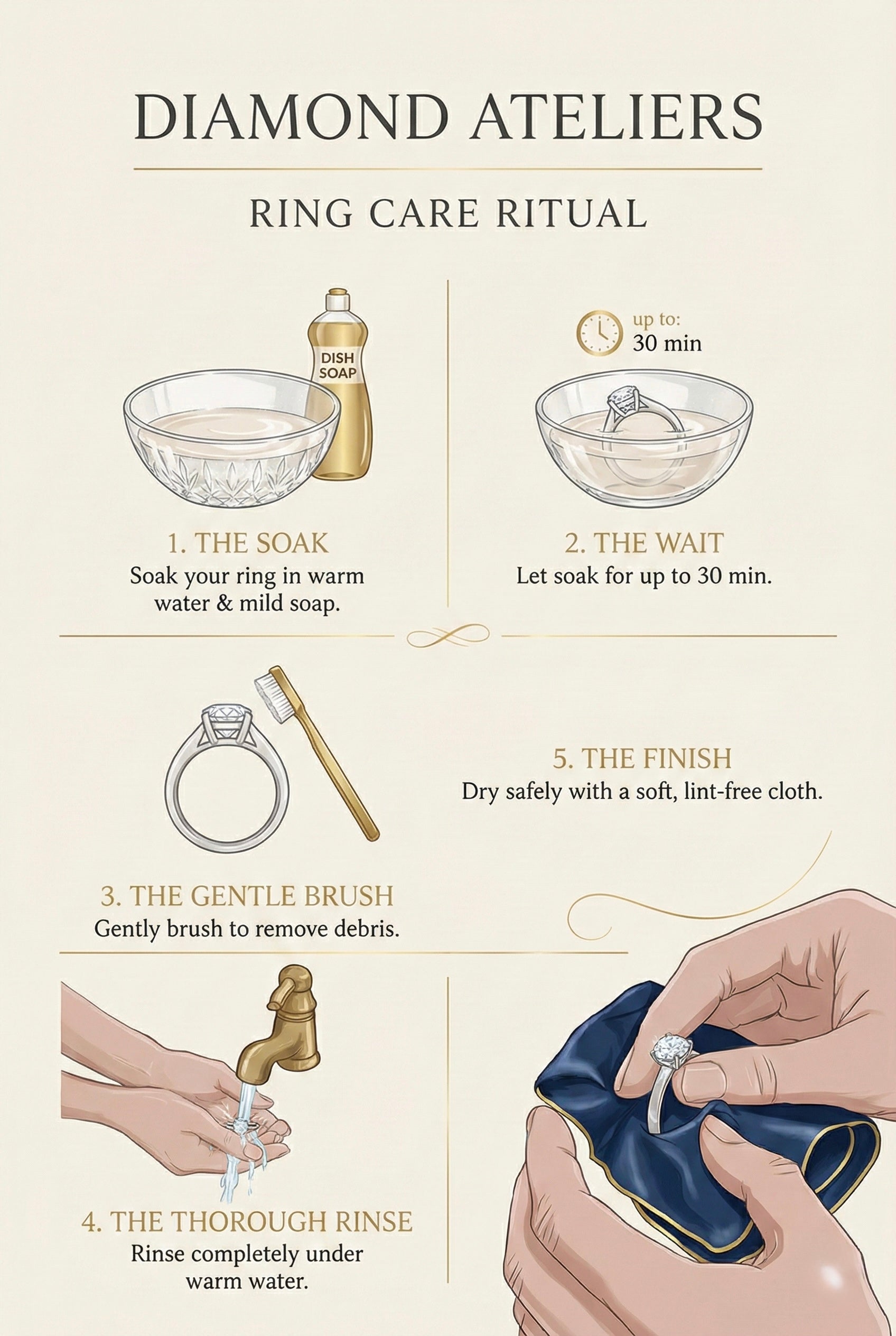
- Clean your ring regularly with mild soap and a soft brush
- Remove it during gym sessions, housework, or manual labour
- Store it separately to prevent abrasion from other jewellery
Professional Assessment Always Comes First
A well-made ring should last decades. Responsible polishing preserves that lifespan rather than shortening it. If your ring looks worn, the correct first step is inspection—not automatic polishing.
Book a professional ring assessment with Diamond Ateliers to determine whether polishing is truly necessary.
— Founder, Diamond Ateliers