Lab-Grown Diamonds in 2026: What Buyers Still Get Wrong
By 2026, lab-grown diamonds are no longer a fringe alternative — they are the default choice for value-driven engagement ring buyers in Singapore. Yet despite their popularity, many couples still walk into our studio confused, misinformed, or influenced by outdated assumptions. Some believe lab-grown diamonds are “fake.” Others assume all lab-grown diamonds are cheap, identical, or destined to be worthless. None of this is true.
At Diamond Ateliers, we design 80–100 bespoke engagement rings every month using lab-grown diamonds. After years of advising Singapore couples, the patterns are clear: buyers who understand how lab-grown diamonds actually work consistently secure larger, higher-clarity stones with superior craftsmanship for the same budget — while those who don’t often overpay or compromise unnecessarily.
This guide breaks down what buyers still get wrong about lab-grown diamonds in 2026, explains what “best value lab-grown diamond” truly means, and shows how to make informed, future-proof decisions.
Misconception #1: Lab-Grown Diamonds Are Not Real Diamonds
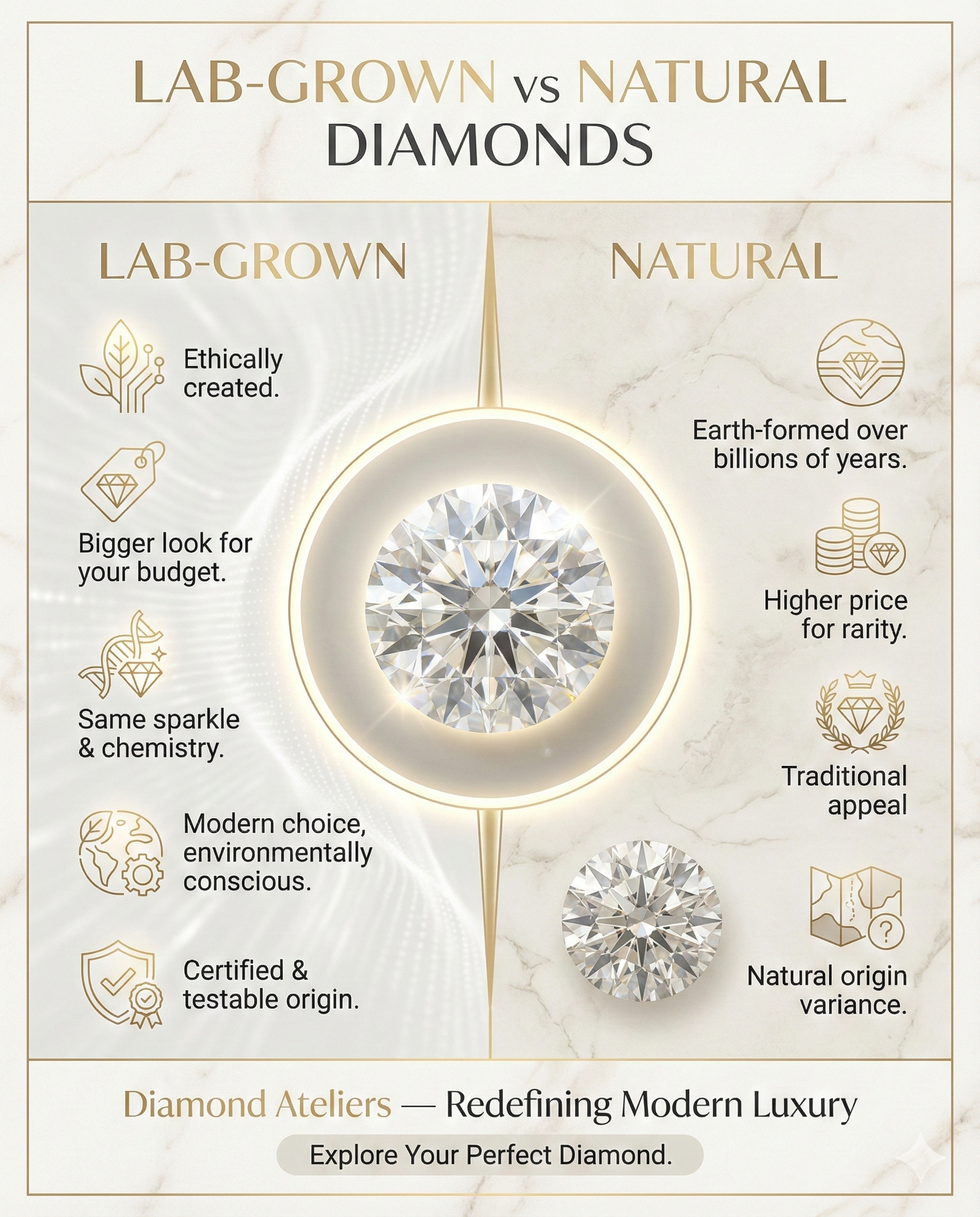
This myth should have disappeared years ago, yet it persists. Lab-grown diamonds are chemically, physically, and optically identical to mined diamonds. They are not imitations, simulants, or substitutes. Under a microscope or gemological test, there is no structural difference — only a difference in origin.
In Singapore, every reputable lab-grown diamond is graded by international laboratories such as IGI or GIA. If a diamond is graded as “diamond,” it is one — regardless of where it formed. Learn more in our diamond education guide.
Misconception #2: All Lab-Grown Diamonds Are the Same
One of the most expensive mistakes buyers make is assuming lab-grown diamonds are interchangeable commodities. They are not.
Just like mined diamonds, lab-grown diamonds vary widely in cut precision, crystal quality, strain, colour stability, and light performance. Two diamonds with identical 4Cs on paper can look dramatically different in real life.
By 2026, the market is flooded with mass-produced stones that prioritise size over optical performance. True value comes from selecting diamonds with excellent cut quality, minimal strain lines, and clean crystal growth — not simply the biggest carat number for the price.
Misconception #3: Bigger Is Always Better Value
Many buyers searching for the “best value lab-grown diamond” focus exclusively on carat weight. This often leads to oversized stones with poor cut proportions, dull brilliance, or visible haze.
In practice, a slightly smaller diamond with superior cut and clarity will look brighter, whiter, and more impressive on the hand. In 2026, smart buyers prioritise visual performance per dollar — not raw size. Understanding cut quality is critical, which we explain in our diamond cut and shape education.
Misconception #4: Lab-Grown Diamonds Have No Resale or Long-Term Worth
Lab-grown diamonds are not investment assets — but neither are most mined diamonds purchased at retail. Engagement rings are emotional purchases, not financial instruments.
What buyers often misunderstand is value retention versus value efficiency. Lab-grown diamonds allow couples to allocate budget where it actually matters: better design, craftsmanship, and daily enjoyment — rather than paying a scarcity premium tied to mining.
In Singapore, we increasingly see couples choose lab-grown diamonds and invest the savings into custom design, higher-quality settings, or future life goals.
Misconception #5: Cheap Lab-Grown Diamonds Mean Smart Buying
Ultra-cheap lab-grown diamonds are everywhere in 2026 — especially online. Many are discounted for reasons not obvious on a certificate: poor light return, brown or grey undertones, visible strain, or weak crystal growth.
True best value does not mean lowest price. It means optimal balance: strong cut precision, clean material, reputable grading, and expert curation.
How to Identify the Best Value Lab-Grown Diamond in 2026
- Prioritise cut quality over carat size
- Avoid overly stretched proportions or shallow cuts
- Inspect diamonds in person or via detailed light performance analysis
- Choose transparent pricing with no artificial “discounts”
- Work with a jeweller who curates, not mass-lists, diamonds
Singapore Price Context: What Buyers Should Expect in 2026
In Singapore, a well-cut 1.5ct lab-grown diamond of excellent clarity and colour typically offers the same visual presence as a mined diamond costing two to three times more. This pricing advantage has stabilised — not collapsed — and reflects manufacturing efficiency, not reduced quality.
Buyers chasing unrealistic prices often compromise on cut or material quality without realising it.
The Diamond Ateliers Perspective
Every month, we redesign rings for clients who initially bought low-cost lab-grown diamonds elsewhere and were disappointed by how the stone looked in real life. The issue is rarely that the diamond is lab-grown — it is that it was poorly selected.
Our approach is simple: fewer diamonds, better diamonds, full transparency.
Final Advice for 2026 Buyers
If you remember one thing: lab-grown diamonds are no longer about “cheap alternatives.” They are about intelligent value. The best buyers in 2026 are not asking how big they can go — they are asking how good they can go for their budget.
If you want guidance tailored to your budget, preferences, and lifestyle, a proper consultation makes all the difference.
Book a private consultation with Diamond Ateliers to view curated lab-grown diamonds and design a ring that maximises value without compromise.
— The Diamond Ateliers Team